

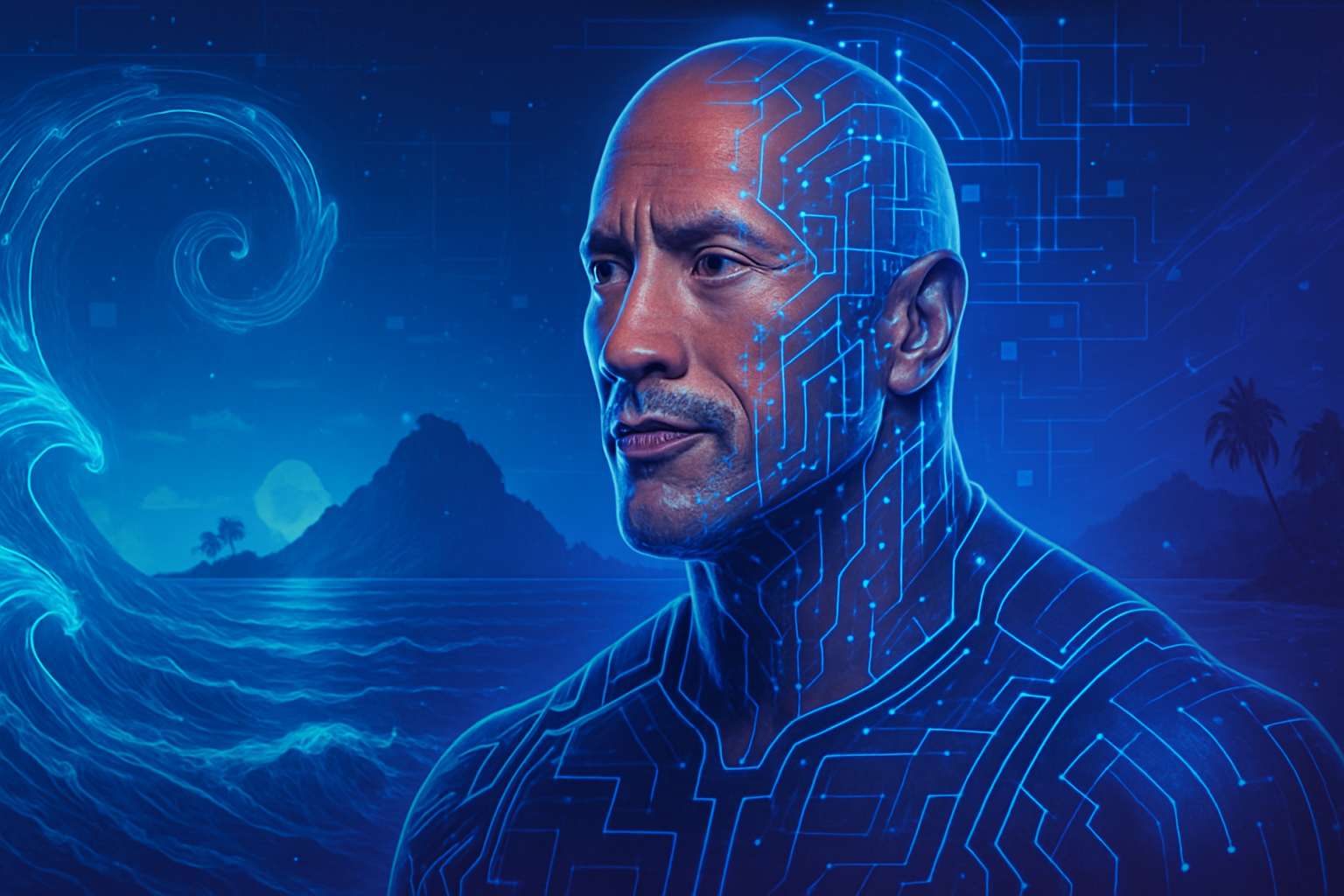
Dwayne Johnson has given his approval for the use of deepfake technology in the film Moana. Disney considered a bold method to achieve production cost savings. Despite the initial approval, the company ultimately decided to abandon this approach, frightened by legal risks and data security concerns. This turnaround raises essential questions about the limits of AI use in filmmaking. The project promised unprecedented innovation, but doubts about the ownership of AI-generated content led to the initiative’s demise. The film, scheduled for release in July 2026, will not include footage of Tanoai Reed’s performance, the stunt double who served as Johnson’s stand-in.
Revolutionary approach by Disney with the use of deepfake
During the production of the live-action adaptation of Moana, Disney considered leveraging deepfake technology. This innovation was intended to digitally replace actor Dwayne “The Rock” Johnson on days when his presence on set was not possible. The use of a double and artificial intelligence generated genuine interest.
Dwayne Johnson and his agreement with Metaphysic
Johnson, known for his portrayal of the demigod Maui, had given his consent to use technology developed by the company Metaphysic. This involved facial mapping of his face onto that of Tanoai Reed, his cousin and trainer, thus becoming Johnson’s stunt double. This process aimed not only to achieve cost savings but also to allow Johnson to “be in two places at once.”
Tanoai Reed, accustomed to working as a double in several productions like the Fast & Furious franchise and the Jumanji films, was selected to reproduce Johnson’s performances. The collaboration between Disney and Metaphysic was therefore promising for the future of cinema.
Project cancellation after prolonged negotiations
After a year and a half of discussions, Disney ultimately abandoned this prestigious project. The company decided to forgo the use of deepfake technology in the film, scheduled for release in July 2026. Executives expressed notable concerns regarding data security and legal uncertainties related to the ownership of AI-generated content.
Legal considerations and associated risks
Legal issues remain prevalent in the industry, especially concerning the creation of AI-generated content. Disney had also considered incorporating an AI-generated character, Bit, into the film Tron: Ares. However, this initiative was abandoned, fearing negative public backlash and complications during negotiations with industry unions.
General progress and challenges of artificial intelligence
Deepfake technology raises complex issues. With the sharp rise in risks associated with artificial intelligence, as indicated in a recent study, one-third of British businesses find themselves exposed to such dangers. Discussions around the ethics and security of advanced technologies, particularly concerning image manipulation, are becoming increasingly significant.
In the face of rapidly evolving technologies, vigilance is necessary. AI-fueled fraud attempts continue to rise, and companies must navigate an increasingly complex environment. It is therefore essential to stay informed of best practices to avoid pitfalls associated with these innovations. Deepfake and artificial intelligence projects, while promising, require a cautious approach to prevent potential abuses.
To learn more about the challenges associated with deepfakes and digital security, consult resources on identifying deepfakes, as well as analyses of the implications of artificial intelligence on the professional world.
Frequently Asked Questions about Dwayne Johnson and deepfake in Moana
Why did Dwayne Johnson give his approval to use a deepfake in the film Moana?
He agreed to use it to reduce production costs and allow the use of his image even when he could not be present on set, using his cousin as a stand-in.
What were the advantages of using deepfake technology for Disney?
This technology allowed for projecting Dwayne Johnson’s face onto his stand-in, Tanoai Reed, enabling him to appear in multiple scenes without requiring his physical presence, while minimizing costs associated with his celebrity.
Why was the project ultimately canceled by Disney?
The project was canceled due to concerns about data security and legal uncertainties regarding the ownership of AI-generated content, after 18 months of negotiations with Metaphysic.
What was the intended scope of using deepfake in the film Moana?
The use of AI was planned for a limited number of scenes, but no footage of Tanoai Reed’s performance will ultimately be included in the film.
Were there other deepfake projects at Disney besides Moana?
Yes, Disney had considered introducing an AI-generated character in Tron: Ares, which would have interacted with Jeff Bridges, but this project was also abandoned due to legal risks and concerns about a potential negative public response.