

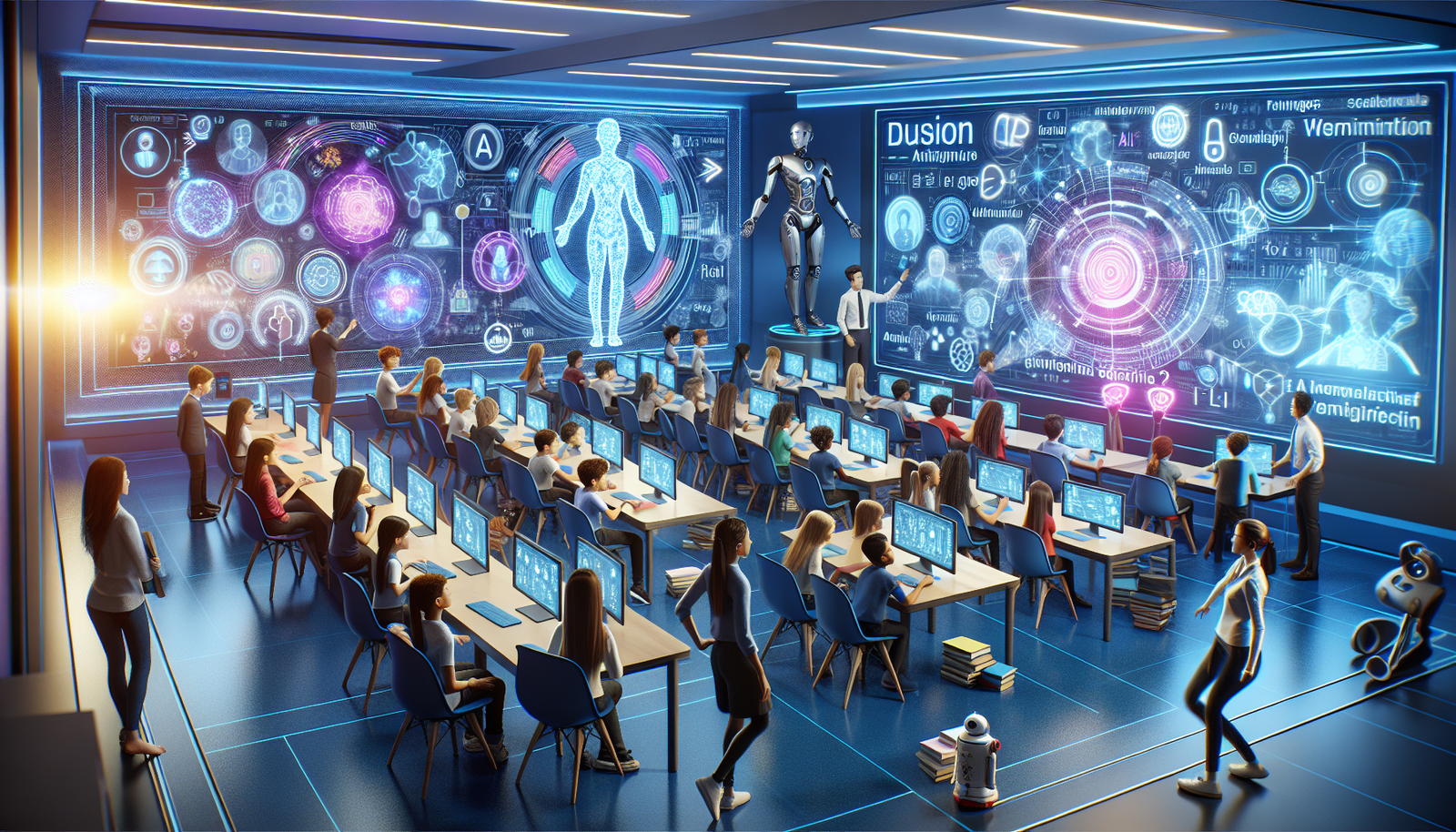
The teaching of the basics of artificial intelligence for all students is asserting itself as a fundamental educational imperative. From data modeling to learning algorithms, these now essential skills are shaping the minds of tomorrow. *Training every student from the first year is a strategic necessity.* The transformations brought about by AI technologies are redefining access to knowledge, thus disrupting the academic landscape. *It is imperative to integrate these foundations into all curricula.* The implementation of suitable programs positions education as a lever to master the contemporary challenges of innovation and ethical responsibility.
The teaching of artificial intelligence at the heart of school programs
Universities and higher education institutions are gradually integrating modules on artificial intelligence (AI) into their curricula. This pedagogical revolution responds to a growing need for familiarity with ubiquitous technologies. Academic administrations recognize that training from the first year is essential to prepare students for the challenges of tomorrow.
A government initiative
The Ministry of National Education recently announced the introduction of specialized AI pathways starting from the 2025 school year. This initiative aims to provide secondary school students with a solid foundation on the fundamental principles of artificial intelligence. The Pix platform will serve as a support for these trainings, addressing concepts ranging from basic algorithms to the ethical implications related to the use of AI.
Ethical and societal issues
Education in artificial intelligence is not limited to technical skills. Ethical reflections have become indispensable in light of potential societal consequences. The relentless race for innovation requires that students also understand the ethical implications of using AI technologies. Academic debates focus on the responsibilities of future professionals.
A multidisciplinary training
Experts suggest that the foundations of artificial intelligence should be integrated into all fields, not just those in the sciences. A multidisciplinary approach enriches learning and allows students to acquire transferable skills. AI training should cover technical aspects but also social ones, to examine the impacts of AI on different sectors and professions.
Development of specific modules
Several institutions are developing specific modules aimed at teachers so they can teach, starting from cycle 3, the basics of artificial intelligence. These modules promote suitable learning situations that incorporate simulation games, collaborative projects, and case studies. This interactive approach facilitates learning and student engagement.
Preparing future professionals
The challenges related to artificial intelligence require higher education institutions to constantly evolve. Training modules continue to emerge, reflecting the importance of equipping students with the skills needed to embrace careers in a constantly changing environment. Companies express an urgent need for a qualified workforce prepared to innovate in a rapidly evolving technological landscape.
The internationalization of AI education
French initiatives resonate in an international context. Other countries are also developing strategies to integrate artificial intelligence into education. This approach aims not only to strengthen students’ skills but also to position these nations as leaders in the field of AI. Collaboration between institutions allows for the exchange of perspectives and best practices.
The role of private actors
Specialized companies also contribute to the teaching of artificial intelligence. Their collaboration with academic institutions facilitates access to cutting-edge technologies and resources. These partnerships result in professionals coming into classrooms, providing concrete insights into the use of AI in the entrepreneurial world. The initiative of Elon Musk, for example, demonstrates a growing interest in AI training, particularly in the video domain here.
A call for ethical training
Concerns about the applicability of AI call for responsible and informed teaching. Student training should include discussions about digital ethics and potential algorithmic biases. Voices are rising to advocate for special attention to representation in AI solutions, to avoid pitfalls and promote fair AI. Copyright issues, often cited in debates, underscore this necessity, as highlighted here.
Informed choices regarding the integration of these technologies must be based on a complete understanding of their impact. The absence of such reflection could exacerbate inequalities and frustrate hopes for qualified employability in the near future.
Enhancing innovation and creativity
Artificial intelligence also opens the door to unprecedented innovations in education. Digital tools combined with AI facilitate the creation of unique educational content. The adaptability of students in the face of advanced learning tools testifies to an era where technology and humanity intertwine to foster a promising future.
It is imperative that the teaching of the basics of artificial intelligence keeps pace with contemporary education. A well-informed society, capable of embracing these evolutions, ensures a smooth transition to a future marked by intelligence and responsibility. Higher education institutions play a pivotal role here, shaping the minds and skills of tomorrow’s leaders.
Frequently asked questions about the teaching of the basics of artificial intelligence
What is artificial intelligence and why is it important for students?
Artificial intelligence (AI) refers to the ability of machines to simulate human intelligence. It is crucial for students because it influences many sectors, making an understanding of its basics essential for their professional future.
At what age should students start learning the basics of artificial intelligence?
Ideally, students should start as early as their first year of study, integrating fundamental AI concepts into their curriculum to prepare them for the challenges of tomorrow.
What are the main issues related to teaching artificial intelligence in schools?
The issues include teacher training, curriculum updates, ethics related to AI, and the need to equip students with critical skills to thrive in an increasingly technological world.
What skills do students acquire by studying artificial intelligence?
Students develop skills in critical thinking, problem-solving, data analysis, and programming, enabling them to better understand and apply AI concepts across various fields.
Are teaching resources for artificial intelligence accessible?
Yes, there are many free and paid educational resources available, including online courses, games, videos, and specialized textbooks, facilitating AI learning for all students.
How does AI influence the future of professions and higher education?
AI is transforming professions by automating certain tasks and requiring new skills. Higher education institutions must integrate AI modules to respond to these changes.
Should students be introduced to AI tools in their first year?
Yes, being introduced to AI tools in their first year allows students to gain practical experience that reinforces their theoretical understanding and aids their adaptation to increasingly technological professional environments.
What types of artificial intelligence training are offered within the school framework?
Training includes modules on the fundamentals of AI, programming, machine learning algorithms, as well as practical projects for a concrete application of knowledge.
How can the integration of AI in school programs improve education?
The integration of AI allows for personalized learning paths, makes teaching more interactive, and prepares students for future challenges by making them more competent in emerging technologies.
Are there ethical concerns to consider when teaching artificial intelligence to students?
Yes, it is crucial to address ethical issues such as data privacy, algorithmic bias, and the social impact of AI to train aware and responsible students in the use of these technologies.