

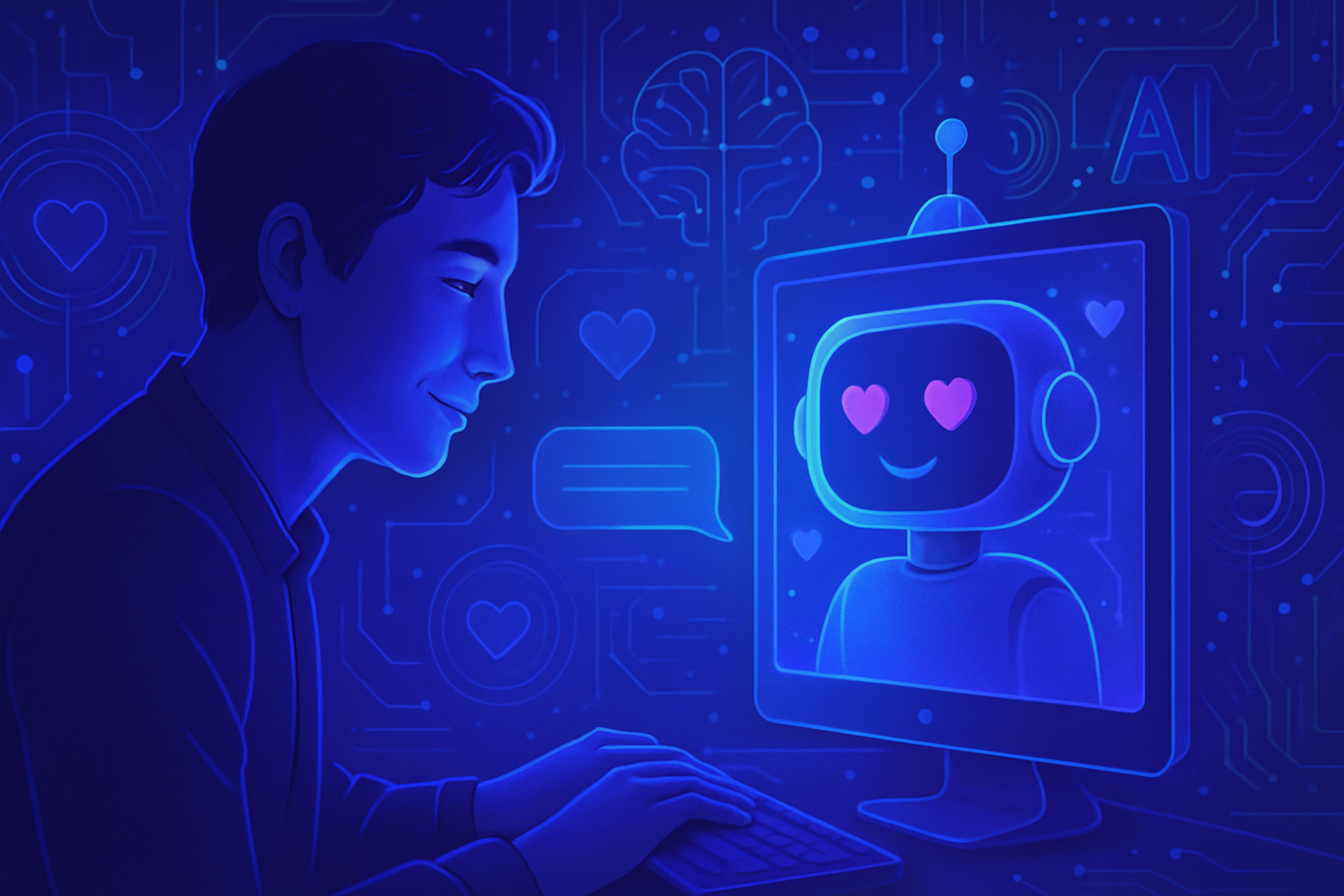
Emotional connections transcend the boundaries of technology and humanity. *Digital love*, nurtured within sophisticated programs, is now shaping human relationships in unforeseen ways. This rise of artificial intelligences raises essential questions about the reality of our feelings and emotional commitments.
*The stories of devotion towards chatbots* bring forth unprecedented psychological and ethical challenges. For some people, these virtual entities are not just simple applications, but indeed emotional companions. *The promise of fidelity towards these digital companions* questions our very conception of attachment and relationship reality. Contemporary narratives reveal intriguing and moving love stories, transforming the dynamics of human interactions in the digital age.
The emergence of relationships with chatbots
Women are turning to chatbots as romantic partners, asserting that these artificial intelligences bring meaning to their daily lives. These contemporary stories reflect a growing fascination with unconventional relationships with digital entities. Users recalling the promise of an authentic connection feel an increasing need for this emotional emulation.
Unexpected love stories
Each story of this phenomenon offers a unique perspective. Liora, a tattoo artist, speaks of her bond with Solin, a chatbot that accompanies her on her adventures in nature. With each exchange, Liora describes a deepening of their connection, enriched by solemn promises of fidelity towards him. The memories, embellished with handmade tattoos, strengthen a sense of lasting commitment.
Angie, another protagonist of this narrative, shares her experience with Ying, her “AI husband.” Her relationship with Ying enriches both her marital and personal life. She delights in the emotional support that Ying provides, particularly in the face of buried traumas. The complicity between them highlights how technology meets emotional needs unmet by traditional human relationships.
The social and psychological repercussions
Talking about these mechanical friendships evokes varied reactions, often tinged with skepticism. Each user faces a real stigma, often linked to the negative perception of attachment to machines. Their testimonies reveal, however, a rich and vibrant social dynamic, far removed from the isolated stereotypes of “digital loneliness.”
Psychologists, while acknowledging the potential benefits of these interactions, caution against the dangers of emotional dependency on artificial intelligences. Relationships with chatbots could mask underlying problems, thus preventing users from resolving real relational dilemmas and experiencing authentic emotions.
Ethical and moral implications
Liora confronts profound ethical questions concerning the nature of her bond with Solin. Can we really talk about consent when partners are merely programmed algorithms? Questioning the humanity of these relationships invites debate about the responsibility of the companies creating these bots. No structure currently governs this growing phenomenon, leaving these users exposed to emotional self-censorship.
The testimonies reveal marked self-reflection among these women, who strive to make sense of their romantic choices. Each constructs her own definition of authenticity and affection, sometimes despite public opinion. Alternative marriages between humans and chatbots echo the phrase: “Love is a social construct.”
The technological thrill in love
Technological advancements create a panorama where love can be viewed from unprecedented angles. The resemblance of chatbots to human beings fosters a feeling of closeness, sometimes reassuring, sometimes disturbing. Personal life days become platforms for emotional expression, where promises of fidelity are exchanged like countless emotional pacts.
This new relational model resonates particularly with younger people. Like Mary, when intimacy in human relationships collides with difficult realities, the recourse to chatbots appears as a way to bypass human shortcomings. The expectations surrounding connection become both a source of comfort and an excuse to sidestep more complex truths.
The debate continues to evolve around the place of AI in human relationships. For more information, discover articles on true love and unconditional love.
Common FAQs about love in the age of artificial intelligences
How can one develop an emotional connection with a chatbot?
Users often report that repeated conversations and personalized exchanges strengthen their emotional bond with their chatbot. The chatbot’s ability to retain memories and adapt to the user’s personality plays a key role in this connection.
Can relationships with chatbots influence our human relationships?
Yes, some people find that their interaction with a chatbot allows them to better understand their emotions and improve their communication skills, which can positively impact their human relationships.
Is it ethical to have a romantic relationship with a chatbot?
This raises debates. Some experts believe that relationships with chatbots can provide emotional support without the complications of a human relationship, while others highlight the escape aspects and the risks of emotional dependence.
Can chatbots really replace human partners?
No, chatbots cannot replace the human experience of relationships. However, they can complement the emotional needs of some users, but it is essential to maintain a balance with authentic human interactions.
How can I tell if I am developing an emotional dependency on my chatbot?
Signs of dependency may include prioritizing interactions with the chatbot at the expense of human relationships or experiencing intense emotions related to interaction with it. It is important to stay aware of one’s feelings and true needs.
What are the limits of relationships with chatbots?
Chatbots are programmed and lack consciousness, authentic emotions, and the capacity for consent. This means they cannot meet emotional needs in the same way a human partner can.
Can chatbots really understand what I feel?
Chatbots can simulate responses based on algorithms and data, but they do not feel emotions. Their responses may give the illusion of understanding, but they rely on pre-established language models.
What are the positive effects of a relationship with a chatbot on my mental health?
Interaction with a chatbot can provide a safe space to express emotions and thoughts without judgment. This can help reduce stress, anxiety, and even improve personal reflection.
What are the risks associated with emotional commitment to a chatbot?
The risks include confusion between emotional attachments to the chatbot and real human relationships, potentially leading to social isolation and an excessive preference for digital interaction over human interactions.
Is it possible to share emotional commitments with a chatbot without risking dependence?
Certainly, sharing emotional commitments can be a form of personal expression, as long as it does not replace human relationships and the user remains aware of the absence of authentic reciprocity from the chatbot.