

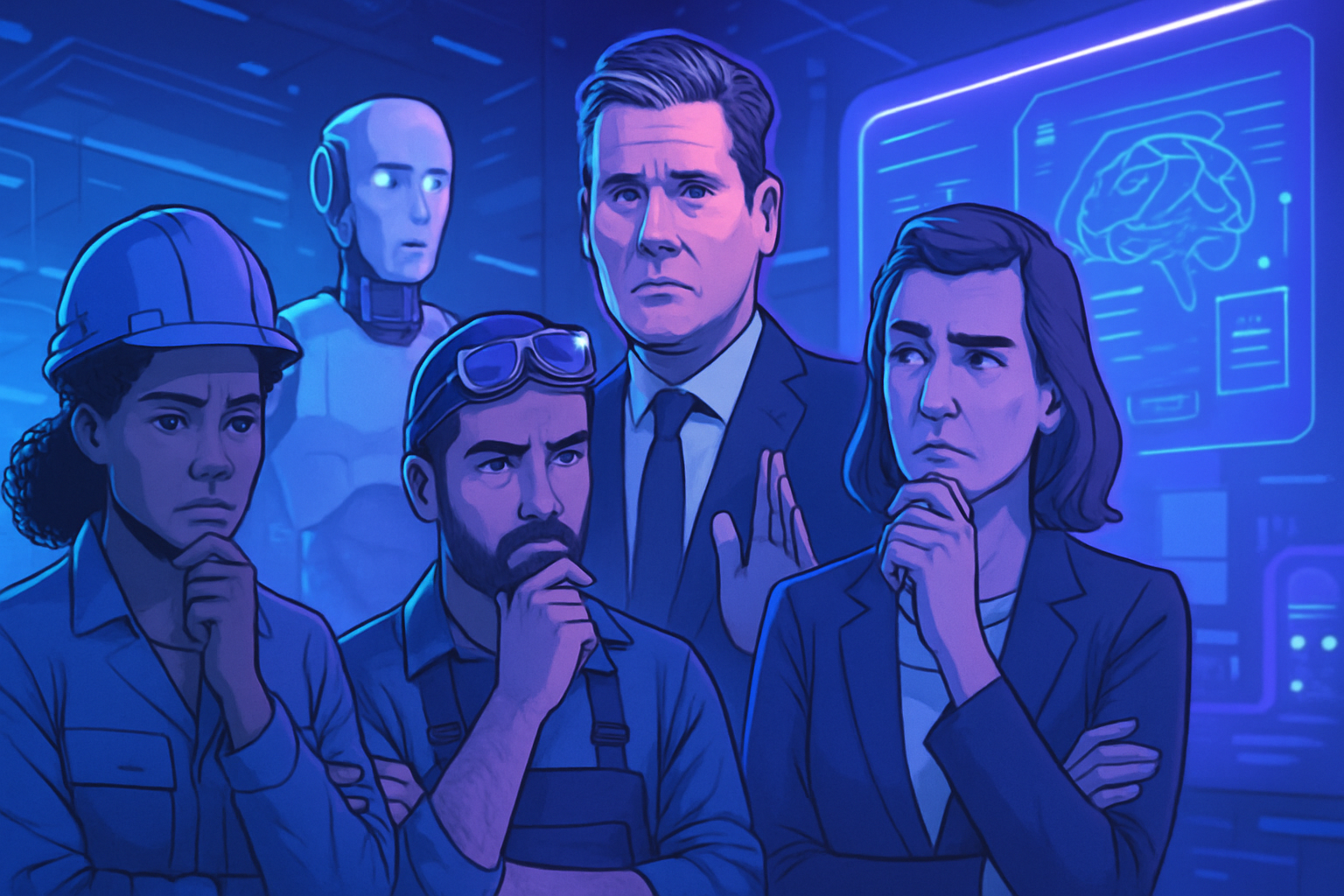
The hesitation of British workers regarding the adoption of AI reflects ambivalent statements. The results of a recent survey reveal a palpable distrust towards the integration of this technology. Although Keir Starmer seeks to propel AI in businesses, reluctance remains, and fears persist.
*Employees remain discreet about their use of AI*, fearing judgment of their professional competence. Concerns about the social impact of AI are becoming increasingly present, exacerbating the need for trust. *The gap between technological enthusiasm and the reality of work* endures, making the situation even more complex.
Hesitations of British Workers Regarding AI
A recent study reveals that British employees display a significant reserve towards the use of Artificial Intelligence (AI) tools within their companies. Thus, a third of workers choose not to broach this topic with their employers, fearing being judged or questioning their competence. More than 13% of adults in the UK openly discuss their use of AI with senior executives.
The research conducted by Ipsos highlights the negative perception surrounding AI. Nearly half of the participants view these tools as assistance for those struggling in their work. This attitude illustrates a resistance to integrating new technologies into daily professional practices. This distrust could hinder the growth and adoption of AI in organizations.
Keir Starmer’s Efforts to Promote AI
Keir Starmer, leader of the Labour Party, has expressed his vision of wanting to “integrate AI into the veins” of the British economy. His goal is to make Great Britain a major hub for AI development, while seeking to reassure the public about the benefits of this technology. Significant investments in AI infrastructure are on the horizon, notably with the involvement of key players from Silicon Valley.
This project includes collaboration with companies like OpenAI, which explores the use of advanced AI models in areas such as justice, security, and education. However, the question remains: are workers ready to embrace these innovations?
A Climate of Distrust and Stigma
The fear of judgment by their peers influences employees’ behavior. About a quarter of respondents apprehend repercussions on their professional image if they admit to using AI. The results raise deep concerns about the capacity of AI to harm social cohesion. The lack of clear guidelines in many companies creates additional confusion regarding the use of AI tools.
Prof Keiichi Nakata from Henley Business School points out that, although transparency on AI usage has improved, a stigma remains. This holds back some employees, who fear that their professional confidence might be perceived as insufficient by their colleagues. Work dynamics could thus be skewed by pervasive distrust.
Fears Surrounding AI in the Medical Sector
A distinct study conducted in the United States observed that doctors using AI in their decision-making are perceived as less competent by their peers. Ironically, these doctors acknowledge the benefits of AI in improving the accuracy of diagnoses. This dichotomy highlights a persistent concern regarding the acceptance of AI tools, even in highly skilled sectors.
Towards Wider Adoption Despite Reluctance
Despite uncertainties, the demand for the integration of AI in the workplace continues to grow. Business leaders perceive potential benefits in terms of productivity and knowledge sharing. Matt Weaver from OpenAI announced that effective adoption of AI is not a mere shortcut but requires suitable skills. The evolution of the professional landscape will depend on the collective attitude towards these innovative technologies.
Initiatives aimed at protecting creative industry workers from the challenges posed by AI are multiplying. British unions are calling for concrete measures to preserve jobs and secure employee rights in this ever-evolving context in light of the evolution of AI.
The tension between rapid technological innovation and employee expectations underscores the need for open and productive dialogue between employers and employees regarding the adoption of AI. This could shape the future of work in the UK and the harmonious integration of technological advancements across all professional spheres.
However, tangible evidence of a significant increase in productivity driven by AI tools is sorely lacking. Gaia Marcus, director of the Ada Lovelace Institute, calls for a thorough evaluation of the impact of these tools on daily working life, stating that it is necessary to understand the implications within society as a whole.
A £10 billion initiative has also been announced to support AI development in Northumberland, highlighting the government’s commitment to innovation while attempting to alleviate concerns among employees. This project could prove pivotal in the British technological landscape in light of the current uncertainty.
Pessimistic scenarios around AI remind us of the urgency for collective reflection. The way workers perceive these technologies will determine not only their success in the professional world but also the future of entire industries. Current trends highlight a pressing need for balance between technological challenges and work ethics. Deep implications are emerging for the future of workers as AI continues to advance in various spheres.
Frequently Asked Questions
Why are British workers hesitant to discuss the use of AI with their superiors?
Workers often fear that their competence will be questioned if they admit to using AI tools. About 33% of employees do not share this information with their bosses, fearing they will be perceived as less competent.
What are the main fears of employees regarding AI?
More than half of workers believe that AI could threaten social structure, and many feel it should not replace human interactions, which leads to reluctance in its adoption in the workplace.
What percentage of workers believe AI is beneficial for work?
According to surveys, the number of workers who perceive AI as beneficial is less than those who believe it has no positive impact on their work, feeding hesitations about its use.
Do companies provide clear guidelines on the use of AI?
No, a study showed that nearly 49% of workers report that there are no formal guidelines regarding the use of AI in their company, contributing to confusion and uncertainty.
How can opinions on AI impact workplace morale?
The fear of being judged by colleagues can lead some employees to refrain from freely discussing the use of AI, creating an atmosphere of distrust and additional stress related to their performance.
What measures could be taken to improve AI adoption in companies?
Companies should establish transparent policies on the use of AI and raise awareness among employees about its potential benefits to reduce the stigma associated with these tools.
How can employees benefit from the use of AI without fearing judgment?
It is crucial for workers to recognize that using AI is a skill and not a substitute for their expertise. Open communication within teams could also help alleviate fears.