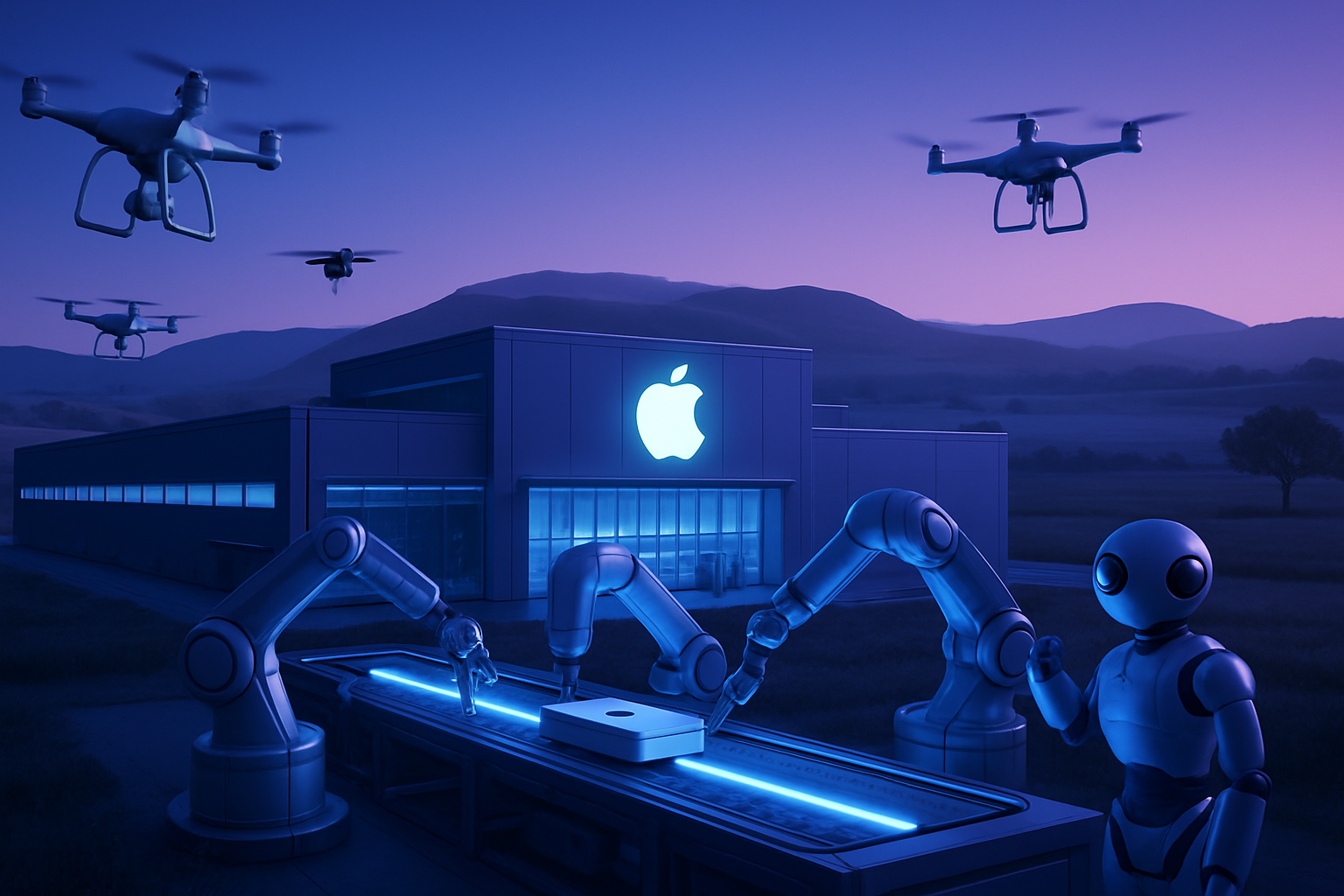



Artificial intelligence shapes a radically transformed future, redefining technological and economic dynamics. In 2025, a decisive turning point arises with the emergence of innovative solutions capable of optimizing decision-making. Companies are preparing to invest colossal sums, foretelling an unprecedented economic upheaval.
The convergence of generative AI and quantum computing opens unexplored perspectives, sparking excitement in the technology sector. The challenge lies in harnessing massive data while ensuring a robust infrastructure. Anticipation feeds on a mix of caution and optimism, marking these developments as essential in our quest for efficiency.
Global AI Spending
Projections show that companies will invest heavily in AI. According to IDC, global spending on artificial intelligence solutions is expected to reach $307 billion by 2025, with an estimate of $632 billion by 2028. A cumulative economic impact of nearly $19.9 trillion is anticipated by 2030, representing 3.5% of global GDP.
The Evolution of Inference
The growing demand for effective inference tools stems from the complexity of AI models. Generative AI has transformed inference, allowing not only for simple query recognition but also for the generation of complex information. Hardware innovations, coupled with software advancements, will foster a significant increase in performance while reducing the total cost of ownership, potentially by a factor of five.
An Infrastructure for Agentic AI
The development of agentic AI will require a network of suitable infrastructures. This type of AI demands near-instantaneous responses through complex systems integrating multiple models. IT leaders will need to invest in accelerated and scalable computing infrastructures, optimized to meet the specific requirements of agentic AI, ensuring optimal performance for real-time decisions.
AI Factories and Their Role
Artificial Intelligence factories, often referred to as “AI factories,” play a decisive role. These structures transform raw data into business intelligence. By 2025, their development will enable the exploitation of massive data volumes to anticipate consumer behavior, optimize the supply chain, and simulate movements in financial markets. This type of innovation will be a competitive advantage for those who can adopt it first.
Liquid Cooling in Data Centers
As AI workloads escalate, leading companies are exploring liquid cooling to optimize performance and energy efficiency. This shift is particularly evident among cloud providers and large enterprises, who are deploying this technology in new data centers dedicated to AI. The transition to colocation facilities will become popular, alleviating the financial burden associated with designing and operating these infrastructures.
The Convergence of AI and Quantum Computing
Significant advances are expected in the field of quantum computing. Researchers are now focused on solving errors related to Qubits. By 2025, the emphasis will be on implementing error correction techniques, requiring fast and low-latency calculations. AI will play a central role in managing these complex quantum systems, optimizing overall performance.
AI trends in 2025 promise to reshape technology and the economy. These developments will be accompanied by a broader adoption framework, catalyzing innovation across various industrial sectors. Companies that can initiate this technological transformation will gain a significant strategic advantage over their competitors.
Frequently Asked Questions about AI Trends in 2025
What are the main innovations expected in AI for 2025?
The main innovations include optimization of inference, development of agentic AIs, creation of AI factories, adoption of liquid cooling for data centers, and convergence with quantum computing.
How could AI impact the global economy by 2025?
According to forecasts, the cumulative economic impact of AI could reach $19.9 trillion by 2030, representing about 3.5% of global GDP.
How much should companies invest in AI by 2025?
Companies are expected to invest approximately $307 billion in AI solutions by 2025, with spending reaching $632 billion by 2028.
What is the concept of “AI factories” and how will it influence businesses?
AI factories aim to transform raw data into business intelligence, allowing companies to analyze consumer behavior and optimize their supply chain.
Why is high-performance inference computing infrastructure crucial?
With the rise of agentic AI, having a scalable computing infrastructure is essential to meet low-latency data processing requirements and ensure quick decision-making.
What is the emerging trend regarding cooling AI-related data centers?
Companies are beginning to adopt liquid cooling to improve energy efficiency and maximize the performance of AI data centers, thus reducing operational costs.
What role will AI play in quantum computing in 2025?
AI will be crucial for optimizing error correction in quantum systems, enabling better performance of supercomputers and facilitating the solving of complex problems.
How can businesses prepare for changes induced by AI in 2025?
Businesses should focus on investing in suitable infrastructures, developing internal AI skills, and adopting innovative AI solutions to remain competitive.
What challenges might companies face in adopting AI technologies by 2025?
Challenges include the need for adequate training, the initial cost of technology investments, and concerns regarding data management and security.