

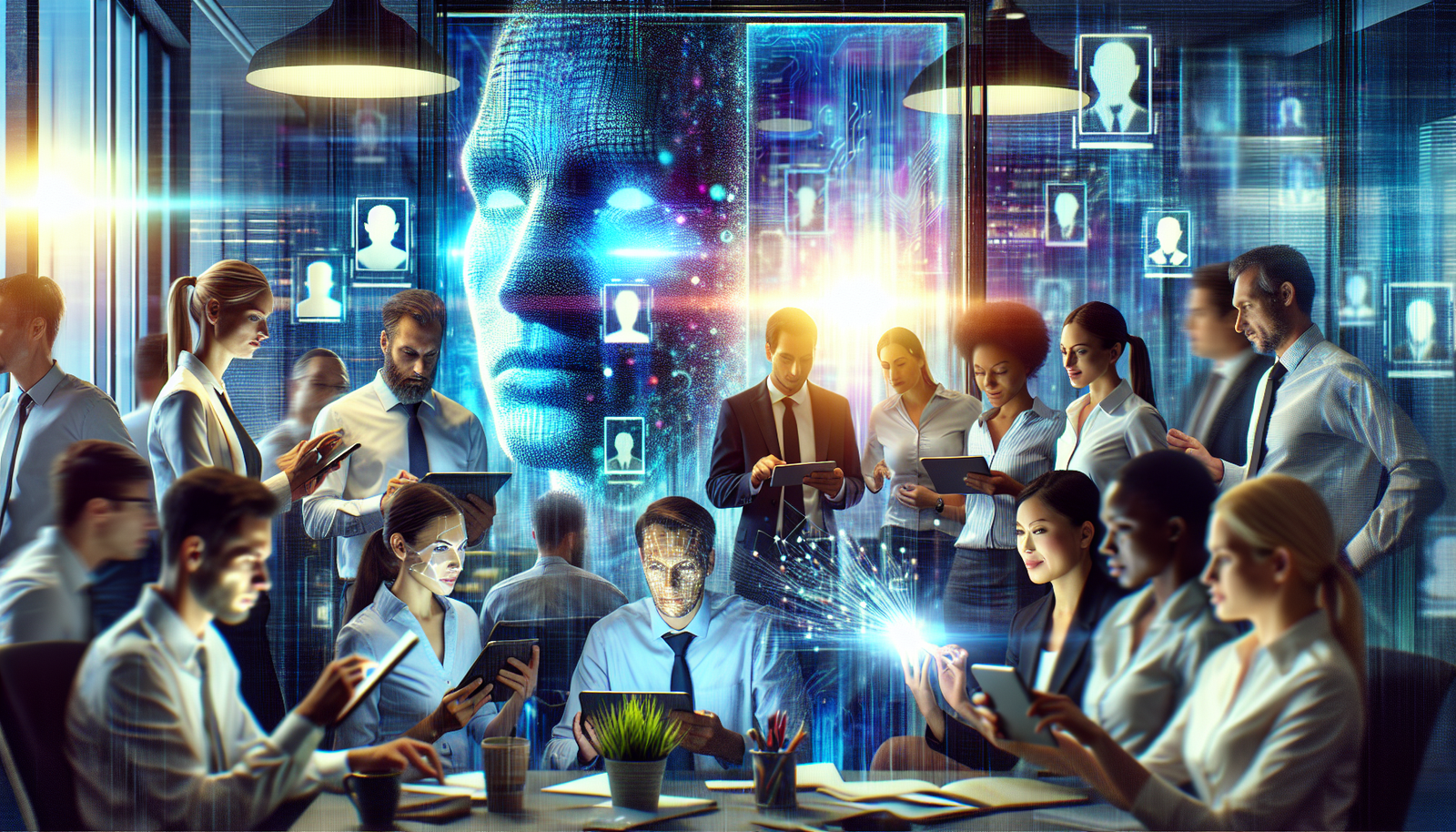
Facial recognition is quietly transforming the dynamics of modern businesses. This sophisticated technology raises ethical and legal questions as it becomes established in various sectors. Its use raises major issues, ranging from employee safety to the protection of personal data.
Our reality is enriched with biometric devices, allowing for smooth access to corporate resources. However, transparency and legal frameworks remain primary concerns in the face of this digital evolution. The gradual deployment of this technology raises questions about its profound implications for society.
Facial recognition is taking root in the professional environment, revealing diverse and current applications. This technology, which relies on the analysis of human biometric characteristics, is gaining increasing success in the context of identification and authentication. Offering secure access processes to premises or identity verifications, companies are turning to this solution to optimize their management of human resources and infrastructures.
Current Applications of the Technology
Recently, the digital staffing agency Iziwork introduced an innovative feature within its application. Designed for its 2000 client companies, it allows users to verify themselves through a simple selfie. This method proves to be quick, while ensuring that the individual indeed presents as indicated on their documents. Iziwork co-founder Alexandre Dardy justifies this decision by stating that, although the number of frauds is not massive, the consequences can be significant.
Legal Compliance and Ethical Issues
Implementing facial recognition within the administrative framework entails strict compliance with existing laws, notably the CNIL and the GDPR. Respect for individuals’ rights represents a major issue. Thus, companies must ensure that data will only be used for identity comparison and not for other purposes. Specialized lawyers are often sought to ensure the legality of such deployment.
Employee Reactions and Social Perception
The feelings of employees towards these devices remain mixed. Some, like an employee of a major French bank, highlight the practicality of this biometric system. However, an increasing number of voices are rising regarding the transparency and opacity surrounding these technologies. The quest for a balance between security and respect for privacy seems essential, prompting companies to adopt an ethical approach to technology.
Future Implications of Facial Recognition
Predictions pose a promising future for facial recognition in the professional environment, with a market expected to generate up to 7 billion dollars in revenue by 2024. However, this expansion raises questions about privacy protection. The lack of disclosure regarding the use of personal data fuels fears among users and civil rights advocates.
Innovations and Emerging Technologies
The rapid development of facial recognition technologies also encourages reflection on more ethical alternatives. Companies are exploring innovative solutions, such as digital masks, to preserve identities while harnessing the benefits of technology. These initiatives aim not to sacrifice individual freedoms in the quest for security, highlighting the importance of continuous dialogue on the regulation of artificial intelligence.
Considerations for Decision-Makers
Decision-makers must take into account the multifaceted realities of facial recognition. The integration of this technology should not come at the expense of principles of transparency and accountability. Collaboration with lawyers specializing in data protection guides companies on the right path for respectful usage. Paying particular attention to employee concerns ensures a healthy climate and wider acceptance of technological innovation.
Frequently Asked Questions about the Quiet Rise of Facial Recognition in Companies
What is facial recognition and how does it work in a professional context?
Facial recognition is a computer technology that allows for the identification or authentication of a person by analyzing the features of their face. In the professional context, it is used to facilitate secure access to premises, systems, or tools, often via a selfie that is compared to an official photo.
What are the main advantages of using facial recognition in companies?
The advantages include improved security, reduced fraud, better efficiency in employee identification processes, and a simplified user experience, notably by replacing traditional methods like access badges.
What are the potential risks associated with facial recognition in the workplace?
Among the risks are privacy violations, biases in the identification system that can lead to errors, and a lack of transparency about the use of collected personal data.
How do companies ensure compliance with data protection laws when using facial recognition?
Companies must comply with the General Data Protection Regulation (GDPR) by informing employees about data collection, obtaining their consent, and ensuring that data is processed solely for specific and legitimate purposes.
Are employees required to use facial recognition to access systems?
Generally, the use of facial recognition is optional. Companies often provide various identification methods, such as passwords or physical devices, allowing employees to choose the option that suits them best.
How do companies manage the biometric data collected through facial recognition?
Companies must secure biometric data, store it in an encrypted manner, and retain this data only for as long as necessary for its use, in accordance with applicable regulations.
What sectors are adopting facial recognition the most?
The finance, security, healthcare, and hospitality sectors are among the first to adopt facial recognition due to the increased need for security and efficiency in their operations.
What measures can companies take to inform and reassure their employees about the use of facial recognition?
Companies can organize information sessions, training, and provide clear documents explaining the use of the technology, its benefits, as well as the measures in place to protect employees’ personal data.