


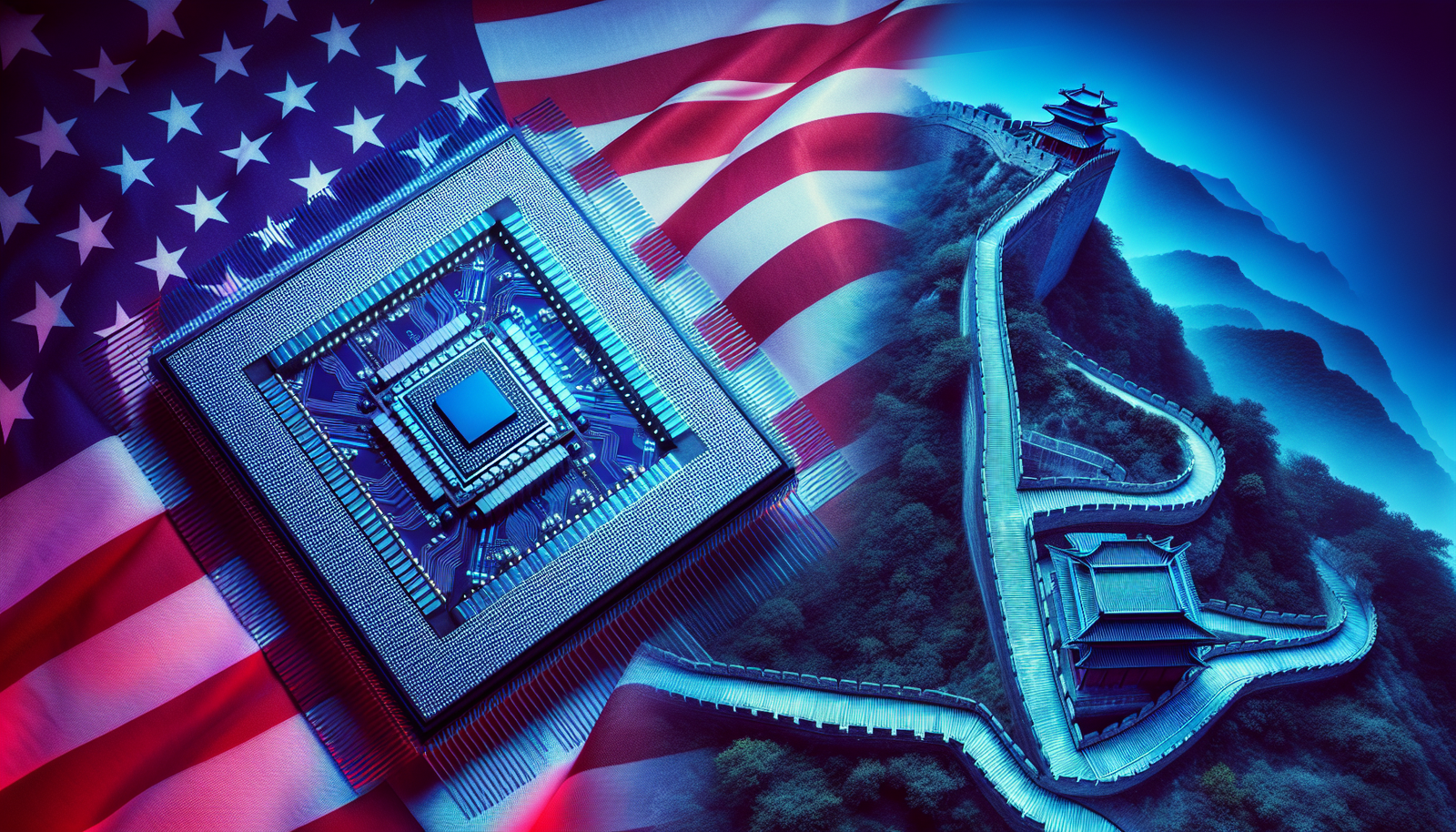
The export restrictions imposed by the United States on China illustrate an escalation of geopolitical tensions. The mastery of semiconductors is becoming a vital strategic issue for both economic powers. By targeting high bandwidth memory chips, Washington seeks to curb Beijing’s technological advancements, particularly in the field of artificial intelligence. The implications of these measures transcend mere trade: they redefine the balance of power in the global semiconductor industry. This climate of rivalry heralds economic upheavals that could have lasting repercussions on a global scale.
Semiconductors: New Export Restrictions
The Biden administration has decided to intensify export restrictions to China. Starting December 2, this initiative particularly affects the semiconductor sector, primarily targeting high bandwidth memory chips (HBM).
HBM Memory and its Strategic Importance
About 140 Chinese companies are now under these sanctions. The restrictions affect around twenty foundries, more than a hundred equipment manufacturers, and two investment funds, according to sources. HBM chips, used notably in graphics cards for models of generative artificial intelligence, represent a major strategic issue.
The U.S. government also bans the export of semiconductor manufacturing equipment to China. This includes around twenty manufacturing tools and three design software. These measures aim to prevent China from mastering a new transistor architecture, the GAA technology, essential for designing advanced components etched at two nanometers or less.
Expanded Sanction Mechanism
The sanctions are not only affecting specific companies. Washington is expanding their scope to 16 Chinese firms deemed essential to Beijing’s semiconductor efforts. These companies will no longer be able to acquire equipment or chips requiring American technology.
International Impact of Sanctions
Several countries, including Taiwan, South Korea, Israel, and Singapore, are experiencing the effects of these restrictions. However, the Netherlands and Japan, which have major companies like ASML and Tokyo Electron, are not subject to sanctions. These countries have already implemented their own export restrictions.
History of American Measures
This tightening of restrictions is part of a historical framework. In October 2022, the United States had already enacted measures to limit the export of the most advanced chips, particularly Nvidia graphics cards intended for AI. Over time, these sanctions have intensified to lower the threshold of required powers and target about forty countries close to China that could become intermediaries.
Repercussions on the Tech Industry
These semiconductor restrictions raise major concerns within the global tech industry. The reaction of the Chinese market could potentially weaken the trade relations of several firms internationally. To counter this pressure, Chinese companies like Huawei are ramping up their efforts to develop local alternatives.
Finally, the landscape of economic relations between the United States and China continues to evolve as these two technological powers clash in a context of heightened rivalry in global markets. The stakes related to semiconductors represent a decisive strategic battleground for the future of both nations.
Frequently Asked Questions
What are the new restrictions imposed by the United States regarding semiconductors exported to China?
The United States is imposing restrictions on the export of high bandwidth memory chips and various semiconductor manufacturing equipment to China, notably prohibiting the use of American technologies.
Who is affected by these sanctions?
About 140 Chinese companies are impacted, including around twenty foundries and more than a hundred equipment manufacturers, as well as some investment funds.
Why have HBM memory chips become a strategic issue?
HBM memory chips are crucial for the functioning of generative artificial intelligence models, as they are used alongside graphics cards to process complex data.
Which Chinese companies are specifically targeted by these sanctions?
The sanctions affect 16 companies considered essential to supporting China’s efforts in the semiconductor sector, banning them from accessing any equipment or chips requiring American technologies.
Which countries are also affected by these restrictions?
In addition to China, several countries such as Taiwan, South Korea, Israel, and Singapore are impacted, although the Netherlands and Japan, which are major equipment manufacturers, are not directly subject to American sanctions.
How do these restrictions affect the global semiconductor market?
The restrictions exacerbate the tension between the United States and China, altering global supply chains and prompting some countries to seek alternative solutions to meet their semiconductor needs.
What impact could these sanctions have on American technology?
By restricting Chinese companies’ access to cutting-edge American technologies, the United States hopes to slow the development of the Chinese tech industry, but this could also reduce the competitiveness of American companies in the global market.
What additional measures could be taken by the United States in the future?
The United States is likely to continue expanding its export restrictions and target other advanced technologies as geopolitical rivalry with China intensifies.