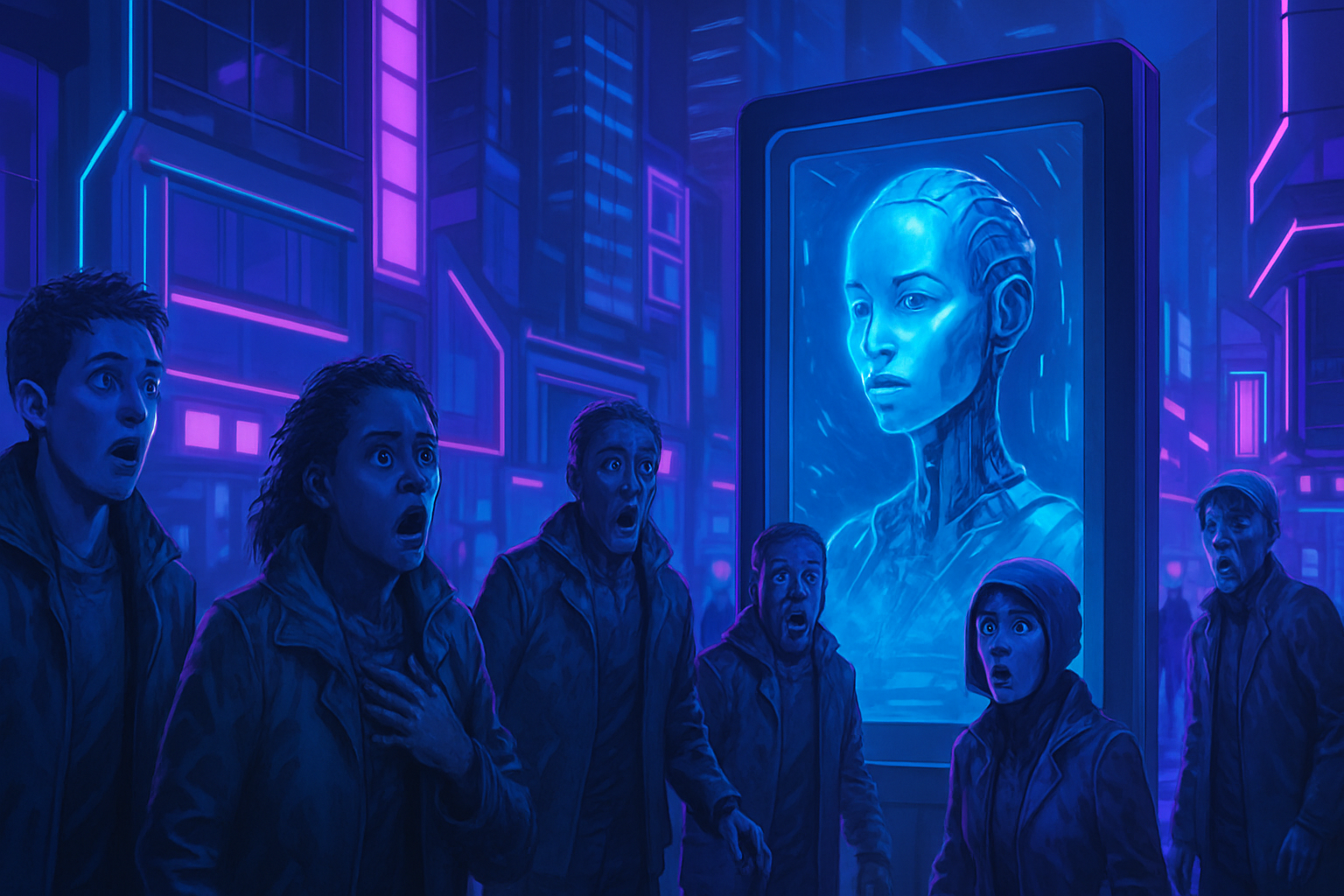


The emergence of revolutionary AI tools is transforming the current cinematic landscape at an unprecedented speed. Creators can now produce high quality works in record time, redefining what it means to create audiovisual content. These technologies allow for a myriad of possibilities, where each filmmaker breaks free from traditional constraints, cultivating unlimited creativity and innovation.
A Technological Revolution: AI Tools in Cinema
Recent advancements in the field of artificial intelligence are transforming the cinematic landscape. Emerging technologies enable filmmakers to create works of impressive quality in record time. The film *Midnight Drop*, directed by Samir Mallal and Bouha Kazmi, perfectly illustrates this dynamic. This short film, generated by AI, deals with American strikes on nuclear sites in Iran.
Fast and Efficient Production
Traditionally, making a film requires months, even years, of hard work. The use of AI allows this timeframe to be considerably reduced. Mallal produced *Midnight Drop* in less than two weeks, a task that would have previously required millions of dollars and extended development. Such speed contributes to an effective reaction to current events.
Content Creation with AI
AI tools, such as Veo3 and OpenAI’s Sora, play a key role in this evolution. These technologies help generate videos, voice-overs, and sound effects. Mallal utilized AI to quickly adjust camera angles and lighting tones, thereby optimizing production without sacrificing creativity. Immediate responsiveness to contemporary events becomes possible.
A New Form of Journalism
The term *cinematic news* takes on a new meaning. News films, once reserved for traditional reporting, are now likely to be produced to cinematic standards. Directors like Mallal advocate for this innovative approach, demonstrating that AI can enhance storytelling while maintaining high artistic quality. This form of narrative offers a different perspective on crucial information.
Impact on the Entertainment Industry
The impact of these technological advancements on the entertainment industry is undeniable. Influential figures like Richard Osman are forecasting a paradigm shift. By 2027, the majority of content on platforms like TikTok and YouTube will be generated with AI assistance. This transformation could even call into question the traditional model of film production.
The Ethical and Legal Challenges
Despite these advancements, concerns arise regarding intellectual property. The possibility of training AI models on protected works without permission raises ethical questions. Content creators fear their works may be used without appropriate compensation. Mallal expresses the need for a framework ensuring fairness for artists in this digital age.
A Promising Future for Cinema
AI tools offer the promise of unprecedented creative renewal. Mallal and Kazmi, by using various AI models, seek to prove that speed and quality can remain compatible. By transforming the interaction between technology and creativity, these filmmakers aspire to redefine the future of film production.
Frequently Asked Questions
What are the main advantages of using AI tools in film creation?
AI tools offer advantages such as reduced production costs, accelerated creative processes, and the ability to rapidly generate high-quality content. This allows filmmakers to focus more on the creative aspect while optimizing their time.
How can AI tools transform the screenwriting process?
AI tools can generate script ideas, optimize dialogues, and analyze audience trends, thus allowing screenwriters to create captivating stories that resonate with the audience while saving time.
What are the current limitations of AI tools in the field of cinema?
While AI tools are becoming increasingly sophisticated, they still lack the essential human touch in storytelling, art direction, and can generate content that lacks emotional nuances.
Does the use of AI tools require particular technical skills?
Above all, a basic understanding of these tools can be beneficial, but many software programs are designed to be user-friendly, allowing filmmakers without advanced technical skills to use them effectively.
Can films created with AI tools compete with those made by human teams?
Yes, films made with AI tools can compete in quality with human productions, but public perception largely depends on how AI is integrated and the creative choices made.
What is the impact of AI on a film’s post-production?
AI simplifies and accelerates several aspects of post-production, such as video editing, creating special effects, and color correction, allowing teams to present a final version more quickly.
What types of content can be generated by AI tools for cinema?
AI tools can generate scripts, dialogues, video edits, sound effects, and even visual elements like animations or synthetic scenes that represent a true advance for filmmakers.
What are the emerging trends related to AI in the film industry?
Emerging trends include the automation of content creation, the use of AI for audience data analysis, and the development of interactive films where AI influences the narrative in real-time based on viewer preferences.