

A legal battle emerges around artificial intelligence. The recent ruling by Judge William Alsup partially favors the AI company Anthropic, but does not extinguish the resistance from rights holders. Coupled with a victory on the principle of “fair use,” the decision nonetheless leaves uncertainties in copyright law. The implications for AI models are monumental. In this turbulent context, the question of the use of protected content continues to divide the sector. Should creativity rhyme with competition or protection?
Judicial victory for Anthropic
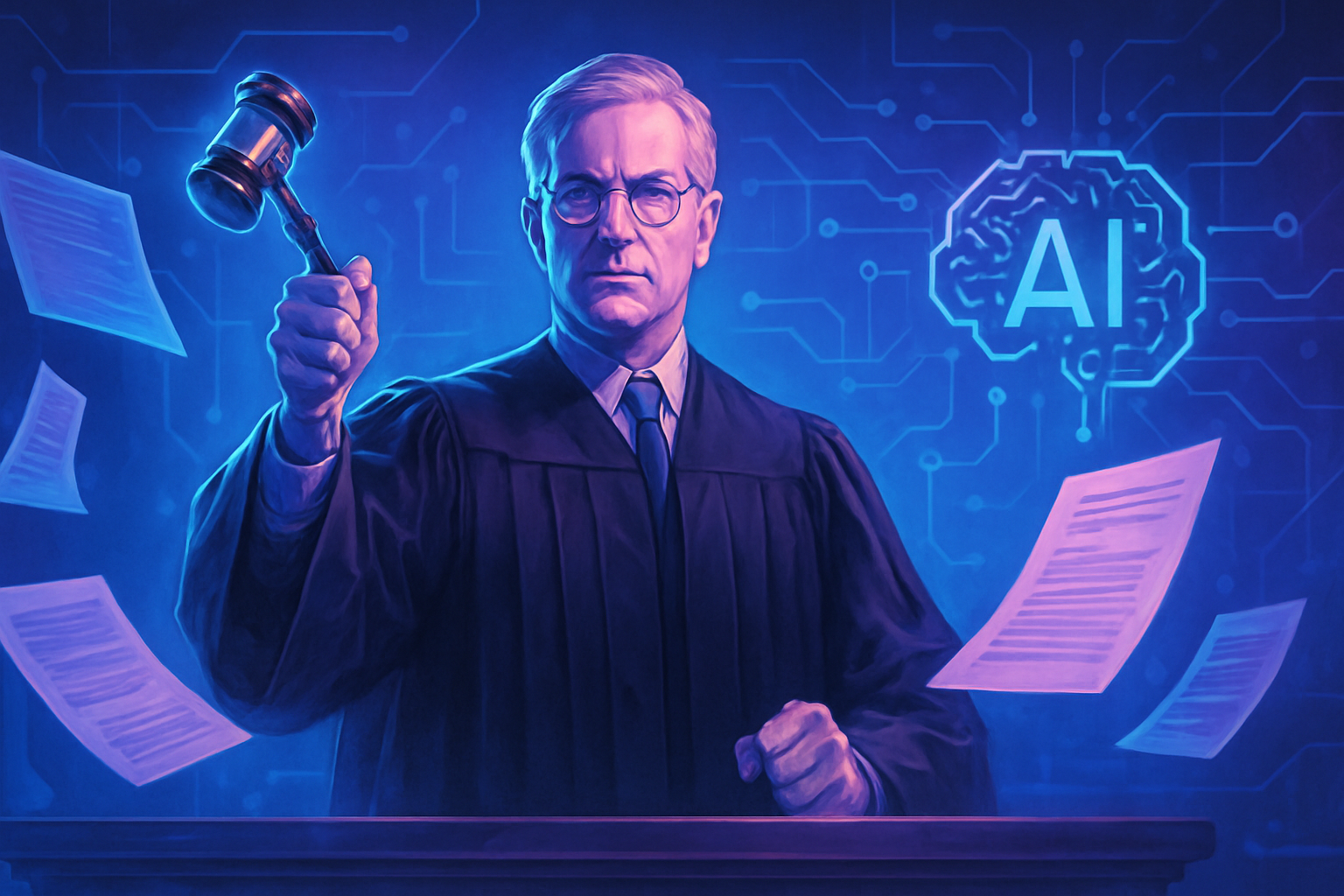
On June 24, Judge William Alsup, appointed by the Northern District of California, issued a favorable ruling for the artificial intelligence company Anthropic. This judgment is seen as a significant advancement in the debate surrounding the use of data protected by copyright in the training of AI models. Companies like OpenAI and Meta had already argued for a _reasonable_ interpretation of copyright laws.
Arguments from AI companies
Anthropic has been solicited to respond to accusations made by several authors, including Andrea Bartz and Charles Graeber, relating to the use of books deemed “pirated.” Judge Alsup highlighted the notion of _fair use_, a legal concept that allows for limited use of protected works. According to his words, using protected content to train artificial intelligence models falls within an acceptable practice, as long as it does not harm the spirit of the original literary creation.
Contrasting reactions
While AI companies welcomed this decision with relief, authors see it as a threat to their rights. By expressing that learning to write could lead to competitive works, the judge emphasizes that copyright law aims to encourage original creation, not to protect authors from competition. This perspective could redefine the boundaries of work protection in the face of emerging AI-based technologies.
Future consequences and implications
The court’s decision could have profound repercussions on the AI industry. Companies like Anthropic could now rely on this interpretation to engage in more ambitious AI projects without fearing heavy litigation. This could foster an increase in innovation in the realm of algorithm-developed creations, even at the expense of copyright as currently understood.
Unresolved questions
Despite Anthropic’s partial victory, lawsuits remain ongoing. The judge’s decision maintained the possibility of reexamining other aspects, including the company’s practices regarding infringement accusations. Such decisions could lay the groundwork for a new legal paradigm, likely to influence the creation of digital content. In this dynamic, the boundary between human creativity and algorithmic innovation may begin to blur.
Perspectives in the creative industry
The discussion around artificial intelligence and copyright extends beyond literature. Other sectors, such as the music industry, are concerned about the potential consequences for the original creation of composers and artists. The growing impact of AI on the music industry demonstrates that the complexity of these issues requires constant attention.
The implementation of recognition and reporting systems, as done by Deezer, illustrates that technology evolves, but challenges remain intact. A balanced approach will be necessary to protect artists while allowing the emergence of new forms of expression.
Ethics and transparency in AI
A recent study questions the perception of artificial intelligence creativity and emphasizes the importance of process transparency within which these algorithms operate. The debate over the distinction between plagiarism and original content is becoming more complex, raising questions about how information is integrated and presented. The article explores these issues attentively.
In this legal adventure, the road ahead remains fraught with challenges, but each decision moves the clock of digital transformation forward. Companies must navigate cautiously through the murky waters of copyright in an increasingly automated and computerized world.
Frequently asked questions about Anthropic’s partial victory concerning copyright
What is the nature of Judge William Alsup’s decision regarding Anthropic?
The court decision has been interpreted as a victory for Anthropic, as it validates a key argument that the use of protected content to train AI models can be considered “reasonable” use of copyright.
What are the positive points for AI companies in this ruling?
AI companies, including Anthropic, may see this as a validation of their perspective on the use of protected creations, which can facilitate the development of their models without fearing copyright infringement lawsuits.
What parts of the ruling maintain lawsuits against Anthropic?
Although the ruling validated one aspect of Anthropic’s argument, the court nevertheless decided to pursue certain allegations relating to the use of books deemed as “pirated.”
How do authors position themselves in light of this court decision?
Authors involved in this case also recognize positive aspects in the decision, as it allows them to continue their legal action regarding the protection of their works against unauthorized use.
How might this decision influence the future of AI applications?
This decision could set a precedent that may influence how AI companies use protected works, potentially paving the way for greater collaboration between artistic creations and AI technologies.
Will the decision impact copyright in the United States?
This decision could play a significant role in ongoing debates about copyright and technology, drawing attention to the need to rethink existing rules in the digital age.