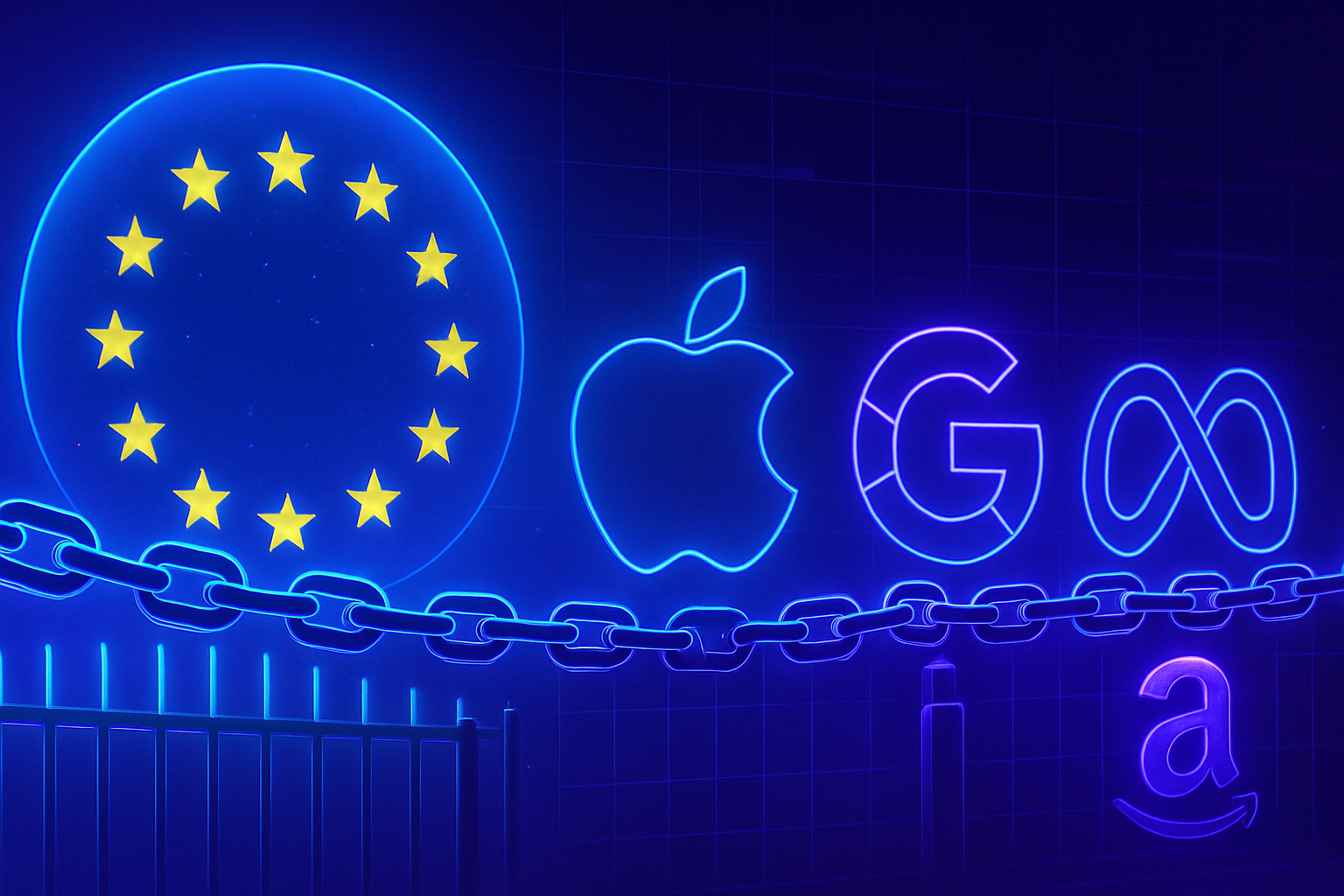


The dominance of tech companies is redefining our relationship with modern technology, erecting barriers between the citizen and innovation. At the heart of this debate, Marietje Schaake, an expert in artificial intelligence, raises pertinent questions about the pernicious influence of tech giants on our perceptions. The promise of a bright future, often overshadowed by ethical issues and power dynamics, requires illumination.
A critical reflection on the societal responsibility of these companies appears essential to restore the balance between profit and the common good.
Identifying the impact of this influence on democracy and regulation remains crucial for our collective future.
Influence of tech companies on our perception
The perception we have of technology is largely shaped by multinational corporations in the sector. These companies, comparable to cephalopods, extend their tentacles into various areas of our lives, from social networks to artificial intelligence systems. This phenomenon raises essential questions about the capability of governments to control these powerful actors.
The new challenges of technological governance
The UK’s Secretary of Technology, Peter Kyle, has suggested treating tech giants as nation-states. This opinion illustrates a persistent misunderstanding of the nature of companies. Even though these entities have acquired unprecedented influence, it is undesirable to accept this supremacy without contest. Democratic governance must prevail over submission to these economic powers. This awareness is imperative to maintain a society where power is balanced.
Impact of the Trump presidency on technology
Donald Trump’s presidency propelled tech interests into the corridors of power like never before. The close ties between Trump and figures like Elon Musk illustrate the correlation between politics and tech companies. The direction taken by the Trump administration has often been influenced by factors such as financial interests and personal preferences, creating an environment of uncertainty for the future of technological regulation.
Stagnant political reactions to the digital revolution
The lack of firm reaction from politicians raises fundamental questions about their understanding of digital issues. Companies, emerging from a countercultural tradition, have successfully presented their business model as a bearer of progress. By positioning themselves as champions of decentralization, these companies have largely dominated the narrative debate, leading to a risk of normalizing their influence.
Lack of political initiatives against tech companies
Currently, few political leaders seem willing to oppose tech interests. Figures like Elizabeth Warren stand out for their clarity on abuse of power by companies. Despite this, the European political landscape painfully lacks deliberate vision. Except for a few genuine initiatives, recent elections have not even highlighted the crucial issue of regulating tech giants.
Uncertainties regarding sovereignty
The perceived loss of sovereignty to tech companies stems from a popular misunderstanding of the issue. Maintaining dependence on American companies undermines the strategic position of European nations. The results of this situation manifest in increasing challenges, where strengthening autonomy becomes an urgent necessity; otherwise, submission to these conglomerates will only increase dependency.
Technology and political ignorance
A manifest technological ignorance penalizes decision-making within governments. Tech companies cultivate a discourse that marginalizes the role of the state. By promoting the idea that governance cannot adapt to the technological revolution, these companies strengthen their grip, thereby evading any form of regulation.
The challenges for the UK post-Brexit
The UK’s exit from the European Union has complicated its position against tech giants. Although individually nations like Australia and Canada have established policies, the UK seems to have opted for a strategy of attracting investments. This approach, transcending government changes, suggests a compliance with economic interests at the expense of developing a solid regulatory framework.
Future perspectives
The implications of Marietje Schaake’s work persist in reflections on the future of technological control. This framework of thought encourages considering how these companies articulate their narrative, thus influencing public discourse around technology. Recognizing these dynamics poses a real challenge for European governments as the struggle for effective regulation of companies intensifies.
FAQ on the influence of tech companies according to Marietje Schaake
What is Marietje Schaake’s stance on the power of tech companies?
Marietje Schaake emphasizes that tech companies have acquired considerable power, comparable to that of states, due to their impact on many aspects of human life, including politics and the economy.
How do tech companies influence our perception of technology?
These companies shape our understanding and expectations regarding technology by promoting narratives that support their business interests, which can hinder a critical assessment of their products and services.
Does Marietje Schaake mention the importance of regulating tech companies?
Yes, she insists on the need for strict regulation to ensure that these companies operate within the law and democratic standards to prevent abuses of power.
What are the consequences of excessive dependence on tech companies?
Such dependence can lead to a loss of sovereignty, where governments become unable to effectively regulate technologies that affect their citizens.
Does Marietje Schaake believe that governments are overwhelmed by technological advances?
She believes that governments are often perceived as incompetent to manage emerging technologies, a perception reinforced by rhetoric coming from the companies themselves.
What examples does Marietje Schaake give to illustrate the abuse of power by tech companies?
She mentions cases where decisions made by large tech companies have bypassed democratic processes, jeopardizing user security and privacy.
What is the role of education in understanding technologies according to Schaake?
Marietje Schaake emphasizes the importance of educating the public about technological issues to strengthen the capacity for critique and demand from tech companies.
How is AI policy addressed by Marietje Schaake?
She addresses the issue of regulating artificial intelligence as essential to avoiding potential risks that may arise, both ethically and societally.
What approach does Marietje Schaake propose to counter the influence of tech companies?
She advocates for strengthening democratic governance mechanisms and for increased citizen engagement in the debate about technologies.
Does Marietje Schaake propose concrete solutions to better regulate tech companies?
Yes, she advocates for specific policies that include laws adapted to new technological realities and a political will to hold these companies accountable.