


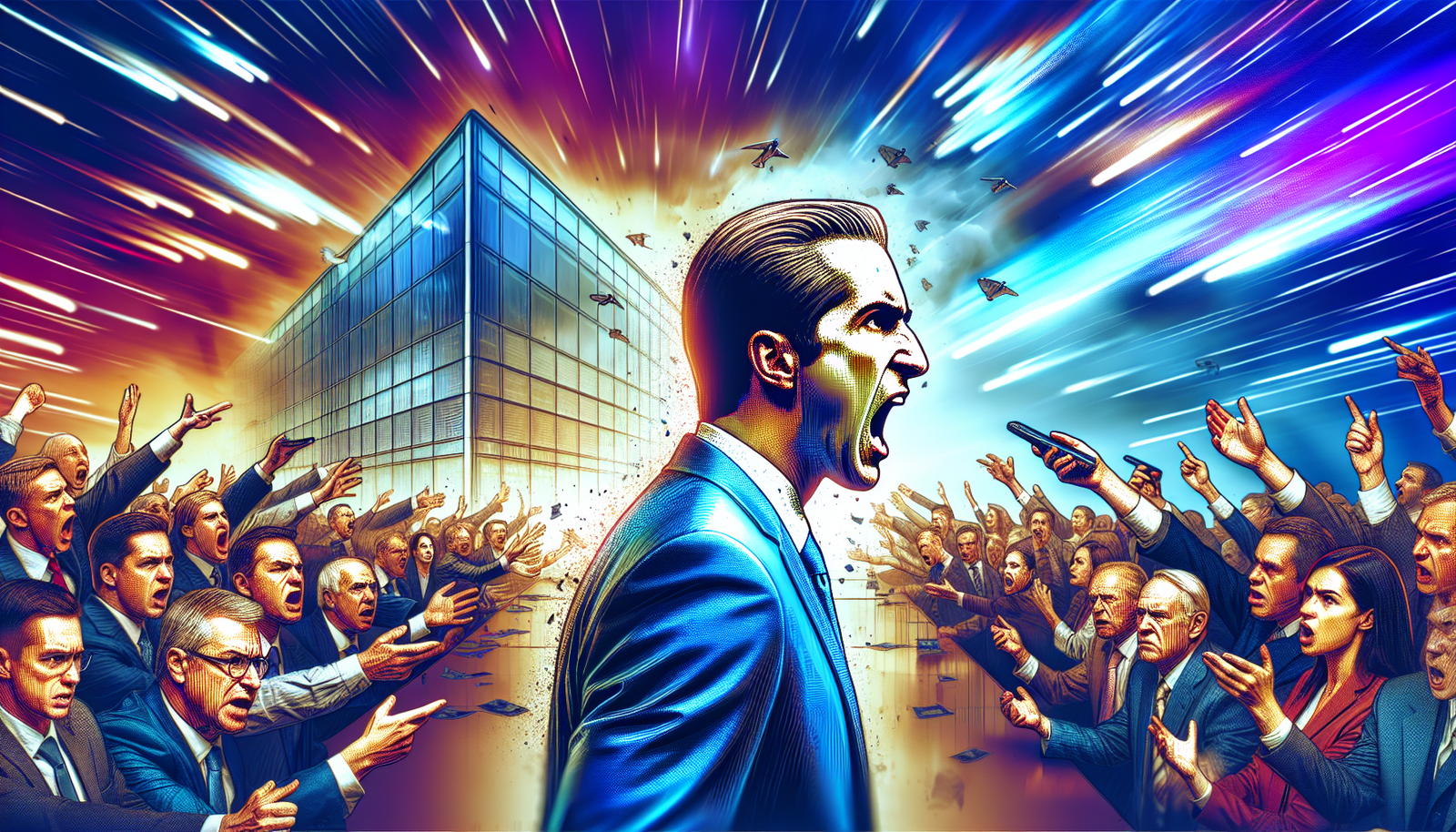
Gelsinger, as the CEO of Intel, has shaped the technological future of the company. His unexpected departure shakes the foundations of Intel (NASDAQ:INTC). Investors, concerned, are watching the stock market volatility. The transition to a co-CEO model raises deep questions. The future of Intel is drawing a picture of uncertainty as the company struggles to regain its prowess. Growth strategies are now being questioned.
Gelsinger retires
The surprise departure of Pat Gelsinger, former CEO of Intel, has shaken the financial markets. Effective December 1, this change was announced without notice, causing unease among investors. Gelsinger, with a career of over forty years in the tech sector, has led Intel through tough times, but his retirement coincides with rising tensions within the board of directors.
Investor reactions
The market reaction was immediate. Shareholders appeared concerned by this announcement, leading to a modest decline in Intel’s stock price shortly after the news. The replacement of Gelsinger by two co-CEOs, David Zinsner and MJ Holthaus, raises questions regarding leadership strategy. This choice of shared leadership could lead to additional complications.
Tensions within management
Reports have indicated a tense atmosphere within the board of directors, with a “conflictual” meeting concerning Gelsinger’s performance. According to sources close to the matter, his presumed inability to respond to Nvidia’s growing competition has fueled doubts about his capacity to lead Intel to recovery. The plans for revival deemed unconvincing have also contributed to his ousting. These tensions have heightened investor concerns in the face of a changing framework.
The implications of this decision
Pat Gelsinger has led significant investments in factories in the United States, driven by the CHIPS Act. Recent cuts to funding related to this initiative may have influenced his decision to depart. This withdrawal comes at a time when the semiconductor industry is undergoing major upheaval. The fear of an increased stagnation of Intel’s market share against the rise of other companies is palpable.
New challenges ahead
The new co-CEOs will need to address several immediate challenges. Their first task will be to calm shareholders’ concerns while redefining Intel’s strategy in the face of longstanding competition. The imminent presentation of new products, such as the Battlemage, will be crucial for restoring investor confidence. Successfully aligning the product offering with market demand will be critical.
Wall Street consensus analysis
Wall Street analysts have recently updated their forecasts regarding Intel stock (NASDAQ: INTC). A “hold” consensus has been established, with mixed opinions among experts. Out of the 30 recent analyses, a single buy recommendation contrasts with 22 holds and seven sell recommendations. Analysts highlight a 43.17% loss in stock value over the past year, creating an atmosphere of uncertainty about the company’s future.
Frequently Asked Questions about Gelsinger’s departure from Intel (NASDAQ:INTC)
Why did Pat Gelsinger leave his CEO position at Intel?
Pat Gelsinger announced his retirement effective December 1, following a tumultuous board meeting and concerns regarding his transformation plan in light of growing competition, notably from Nvidia.
How does Gelsinger’s departure impact investor perception?
Gelsinger’s departure triggered negative reactions among investors, resulting in a slight decline in Intel’s stock price on the day of the announcement.
Who takes over after Gelsinger’s departure?
Following Gelsinger’s departure, Intel has decided to appoint two co-CEOs, David Zinsner, the Chief Financial Officer, and MJ Holthaus, Head of Products.
What are the potential consequences on Intel’s projects following this leadership change?
The leadership change could result in delays in implementing foundry projects and initiatives aimed at regaining market share against competitors like Nvidia.
Is Gelsinger’s departure the result of pressure from the board?
Reports suggest that Gelsinger’s departure decision may be linked to disagreements within the board, especially regarding his strategies in response to competition and investments in factories in the United States.
What is the analysts’ opinion following Gelsinger’s resignation?
Analysts maintain a “Hold” rating on Intel’s stock, with some skepticism about the company’s future given the recent leadership turbulence.
Will Intel’s stock rise or continue to fall after Gelsinger’s departure?
Forecasts on Intel’s stock are mixed, with an estimated potential increase of about 2.69% according to current estimates, but the uncertainty surrounding the leadership transition could hinder these gains.
Will Intel’s future projects, such as the Battlemage, be affected by Gelsinger’s departure?
Gelsinger’s departure could potentially influence the launch date and development of the Battlemage, depending on the direction the new executive takes.
What measures does Intel plan to reassure investors after Gelsinger’s departure?
Intel may need to strengthen its communication and clarify its future strategic plans to regain investor confidence after this notable leadership change.


 and how frustrated shareholders are reacting. Analysis of strategic issues and future prospects for the company, in a context of managerial turbulence.)