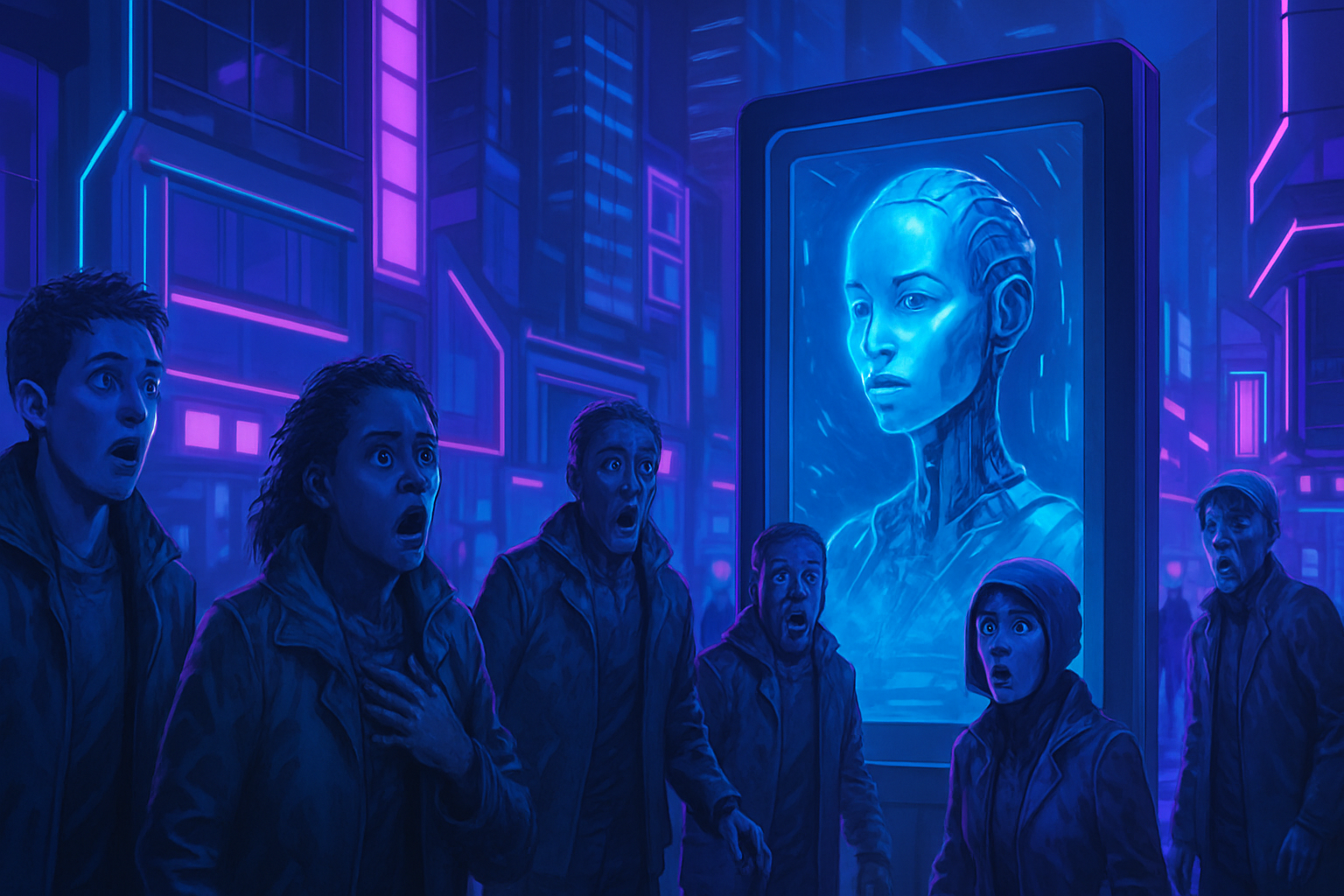


Artificial Intelligence profoundly changes the professional landscape. The stories of workers facing these transformations deserve particular attention. The medical perspective offers a unique view on these significant transitions. _Three compelling illustrations_ demonstrate unexpected transformations at the heart of work. The adaptation challenges raise crucial questions about employees’ mental health. _Appropriate support_ becomes a determining factor for the sustainability of skills in the professional environment. The lessons from fifteen years of observation in occupational medicine reveal as many opportunities as challenges.
Professional transformations in the age of Artificial Intelligence
At the heart of occupational medicine, the emergence of Artificial Intelligence (AI) influences professional paths. Initial fears often give way to tangible and positive results, reflecting a more nuanced reality than alarmist discourses suggest.
Three emblematic cases
Sarah: from accounting assistance to promotion
Sarah, 34 years old, joined an automotive supplier as an accounting assistant. The integration of an AI software revolutionized her daily tasks, reducing her repetitive data entries by 80%. She now finds herself supervising data quality while training her colleagues. This evolution enabled Sarah to achieve a promotion and a 15% salary increase.
“I have finally found meaning in my work,” she confides. The AI eliminated the musculoskeletal disorders she previously encountered, paving the way for more fulfilling tasks. In anticipation of this change, Sarah also took courses in data analysis during her evenings.
Marc: redefining his role
Marc, 45 years old, a sales representative at an insurance company, previously sought consultation for sleep disorders related to increased stress. The launch of a chatbot in his company fueled his concerns about imminent replacement. A year later, Marc focuses on complex cases and human relationships, enjoying a 30% increase in his sales figures.
The consultation reveals a marked improvement in his health: stabilized blood pressure, recovered sleep. His fears have dissipated, transforming his professional journey into a rewarding experience.
Léa: ease in the face of technological mutations
Léa, a 28-year-old freelance graphic designer, embodies the capacity for adaptation within a changing artistic environment. Worried about tools like Midjourney and ChatGPT, she nonetheless chose to train herself in them. This wise choice now allows her to handle three times more projects, focusing on creative strategy.
The reduction of stress related to tight deadlines has paid off. Léa reports a significantly improved health assessment, illustrating how AI can promote professional fulfillment.
The observed evolution mechanisms
These three paths exemplify a trend observed over fifteen years in the field of occupational medicine. Major technological evolutions follow a pattern of transformation in three stages: initial adaptation difficulty, followed by improved working conditions for those who prepare.
A study conducted by the CEO of Google highlights that 60% of today’s jobs did not exist in 1940. This underscores the cyclical nature of professional mutations driven by AI, transforming roles without necessarily eliminating them.
The role of support in the transition
Clinical observations highlight the necessity of support to successfully navigate this transition. A significant portion of my patients express concerns about their technological evolutions at work. Support is often crucial and can distinguish between success and failure in adapting to AI.
Companies investing in AI and training for their teams could see a workforce increase of 10%, according to a study by Accenture. Training formats are also evolving, moving towards short and practical learning experiences integrated into daily work.
Necessary preparations for successful integration
Paths that combine technical skills and psychological preparation are becoming increasingly essential. Occupational health organizations are evolving and offering programs that facilitate this transition.
As an occupational physician, I provide several recommendations to anticipate the transformations:
- Anticipate technological evolutions; technological monitoring is also a health skill.
- Invest in continuous training, considered as a preventive medical prescription.
- Maintain the balance between technological adaptation and personal well-being.
The emergence of Artificial Intelligence in the professional world offers unprecedented perspectives, redefining the contours of contemporary work. To delve deeper into these evolutions, consult additional resources, such as this article about advances in AI and an analysis of the historical impacts of technology.
Questions and answers about Artificial Intelligence in the professional world
How does artificial intelligence improve working conditions for employees?
It allows for the reduction of repetitive and tedious tasks, which decreases musculoskeletal disorders and offers a new dynamic in work organization.
What are the psychological impacts of artificial intelligence on workers?
Employees may experience anxiety regarding technological changes, especially if they fear losing their jobs. However, many workers also feel liberated from thankless tasks, thus finding meaning in their work.
What types of training are suitable for employees facing developments in artificial intelligence?
Micro-training sessions and practical sessions integrated into daily work are recommended, promoting direct learning connected to work realities.
How can companies support their employees during the transition to artificial intelligence?
They should invest in continuous training programs while ensuring psychological support to help their employees adapt to new demands.
Which jobs are most threatened by automation and artificial intelligence?
Repetitive and easily automatable jobs are the most exposed, but there is an emphasis on the need to retrain workers so they can move toward high-value roles.
How can artificial intelligence help reduce stress at work?
By handling routine tasks, AI allows employees to focus on more meaningful and rewarding responsibilities, contributing to greater job satisfaction.
What are the signs of successful adaptation to artificial intelligence according to occupational medicine?
Notable improvements in physical and mental health, such as better sleep, proper posture, and more positive exchanges about future professional prospects, are indicators of successful adaptation.