

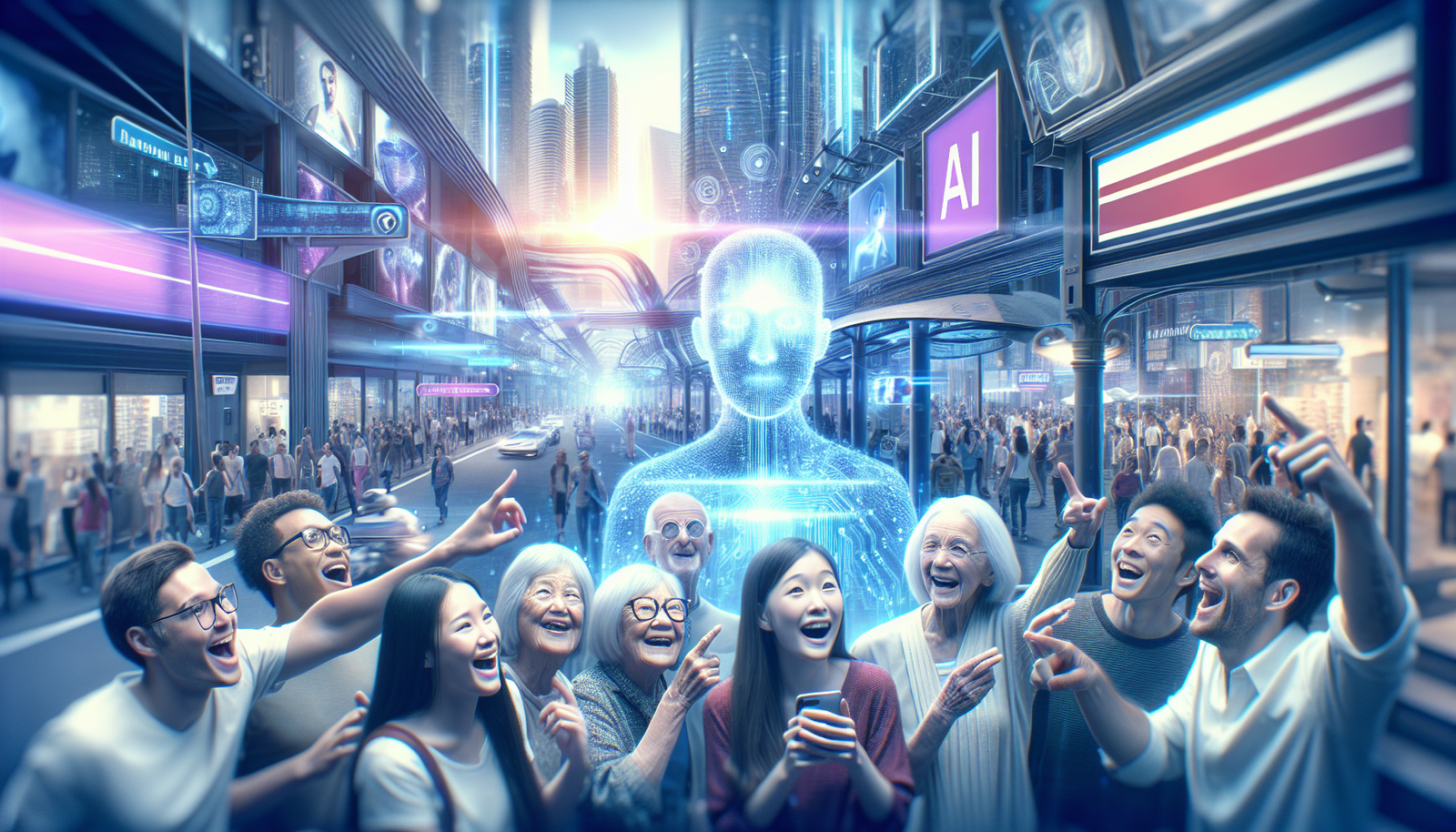
The inexorable rise of artificial intelligence is redefining the very nature of human interactions, shaping an unprecedented future. At the heart of this revolution, the transformation of social relationships urges everyone to rethink their communication and engagement. By 2025, AI transcends the simple technological tool, becoming an essential player in our daily exchanges. Its integration into various sectors, such as finance and human resources, leads to an unprecedented optimization of processes, but also raises critical questions about ethics and privacy. The horizon of 2025 is expected to be a vector of profound change for humanity, where artificial intelligence will become a partner rather than a mere assistant.
Transformation of human relationships through AI
Human relationships will undergo a radical transformation by 2025, as artificial intelligence becomes ubiquitous in our daily lives. The integration of advanced technologies will permeate personal and professional spheres, thus redefining human interactions at a level where humans and machines coexist harmoniously.
An interconnected ecosystem
By 2025, AI will adopt an interconnected ecosystem format, significantly altering the nature of our communication. Different AI platforms will interact, allowing us to have seamless and personalized experiences. Generative AI networks, still scattered today, will form an intelligent social fabric interacting through virtual assistants.
Collaboration between humans and AI
The professional world will also see a new dynamic of collaboration. AI will be integrated to optimize work processes. Repetitive tasks will be handled by automated systems, leaving humans the opportunity to focus on activities requiring creativity and empathy. This change will elevate human interactions, relying on enhanced relational skills.
Management of personal data
Trust in the management of sensitive data will be crucial. The establishment of advanced security mechanisms, such as the use of “extended pop-up windows,” will be decisive in encouraging the adoption of AI technologies. Users will thus be able to share their information securely, assured that this data will not be stored indefinitely.
Ethics and transparency
The adoption of AI will also lead to regulatory bodies addressing its use. Transparency will become an essential requirement, both for companies and individuals. Actors in the financial and insurance sectors will need to demonstrate the effectiveness of their machine learning tools while adhering to rigorous ethical principles.
A future of personalization
Users will benefit from personalized AI services tailored to their behaviors and preferences. Interactions with intelligent assistants will evolve, based on our personal and cultural values. These advancements will foster an environment that values individuality, a transformation appreciated in a world where uniformity often prevails.
Challenges and opportunities
This transition towards an AI culture will nonetheless pose significant challenges. The fear of dehumanization of our interactions and the jeopardy of privacy will stand among the major concerns. However, these will also pave the way for significant opportunities. Companies capable of adopting a proactive approach will generate a competitive advantage by capitalizing on augmented intelligence.
In summary, the redefining of human interaction
The changes in human dynamics by AI in 2025 should not be underestimated. The impact of this evolution will be profound, in both social and professional spheres. Simultaneously, individuals and organizations will need to find a balance between the benefits of AI and the preservation of fundamental human values. Adaptability will be essential to navigate this new technological era.
Tech giants are investing heavily in these developments, where the machine will no longer be seen as a mere tool, but as a full-fledged participant in our lives. Work modalities, information consumption, and daily interactions will be transformed, thus redefining our relationship with technology.
Frequently asked questions about artificial intelligence in 2025
How will artificial intelligence change our human interactions by 2025?
By 2025, artificial intelligence will facilitate human interactions through personalized assistants capable of understanding our preferences and emotions, thereby enhancing connectivity and empathy.
What will be the impacts of AI on the dynamics of interpersonal relationships in 2025?
AI will reshape the dynamics of interpersonal relationships by enabling more effective and enriching interactions, while raising questions about privacy and the authenticity of relationships.
Will trust in AI increase by 2025?
Yes, trust in AI will increase due to regulatory efforts, explainable AI models, and greater transparency regarding the use of personal data.
What are the ethical risks associated with the use of artificial intelligence in human relationships?
Ethical risks include the potential for bias in algorithms, the manipulation of emotions, and increased reliance on technology, which could affect the quality of human interactions.
How might AI influence communication in the professional environment by 2025?
AI will improve communication in the professional environment by automating routine tasks, facilitating collaboration among teams, and providing analytical tools that enhance collective decision-making.
Which AI tools will be most influential in our lives by 2025?
Tools such as voice assistants, advanced chatbots, and generative AI systems will play a key role in making technology more accessible and improving our daily lives.
How will AI affect the perception of human relationships?
The perception of human relationships may evolve towards a demanding dependence on technology, prompting questions about the very essence of what constitutes an authentic relationship.
What skills will be necessary to navigate a world dominated by AI by 2025?
The required skills will include an understanding of AI technologies, critical analysis of technological tools, and intercultural communication skills to maintain strong relationships.
What cultural changes can we anticipate from AI in 2025?
We can anticipate a cultural shift towards a better acceptance of technologies, while posing questions about ethics, responsibility, and the need for a balance between digital life and human life.