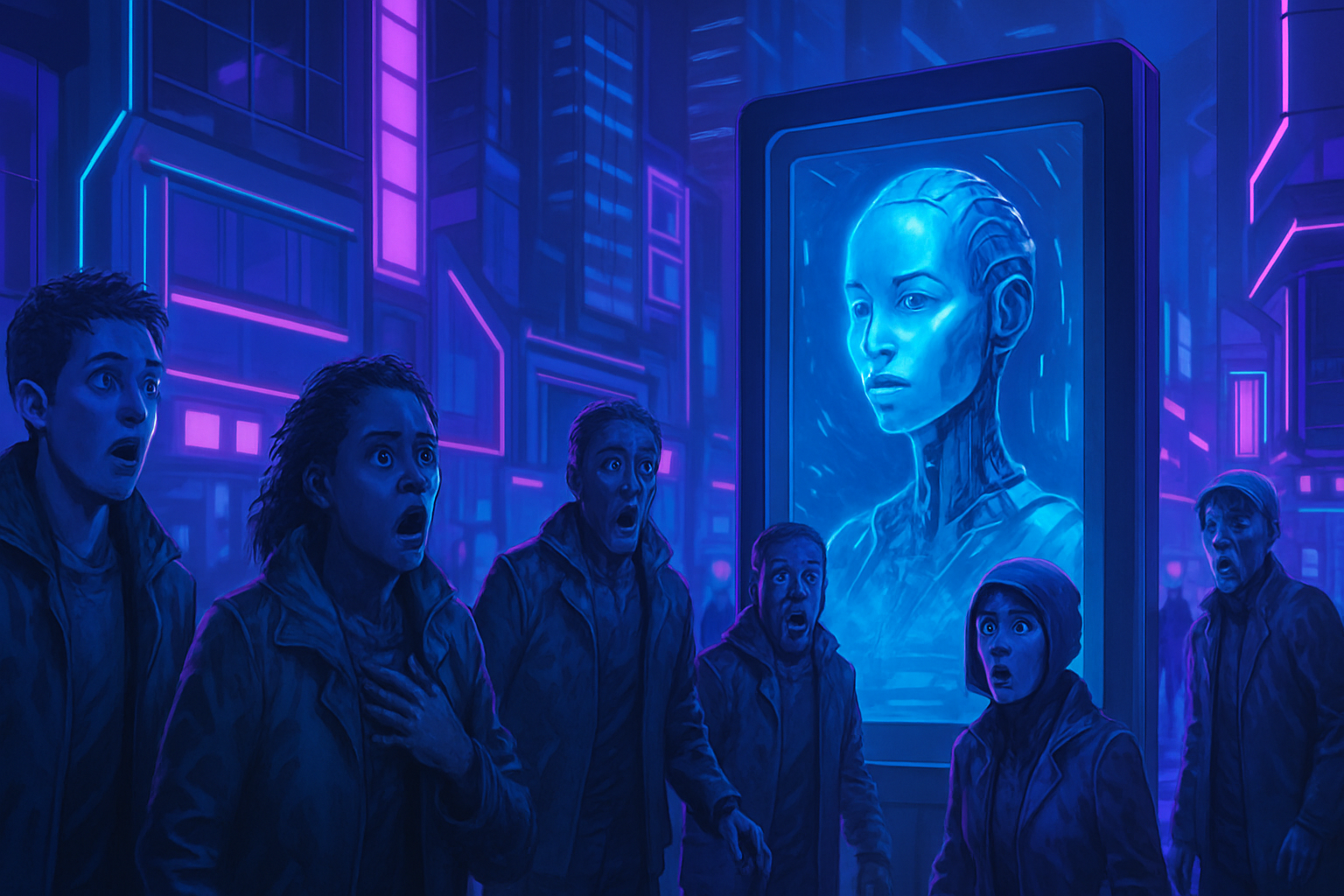


Artificial intelligence, the promise to *revolutionize our daily lives*, could it really free up our time? The prospect of a world where machines take on mundane tasks raises profound questions. *The impact on our creativity* and our learning abilities deserves particular attention. These technological evolutions raise dilemmas about our relationship with exploration and innovation. The crucial question remains: *do we really lose the thread of our curiosity* in the face of automated assistance? In scrutinizing these issues, it becomes imperative to evaluate the balance between efficiency and personal fulfillment.
The impact of artificial intelligence on our free time
The constant emergence of artificial intelligence in various sectors raises deep questions about its potential to free up time for individuals. Recent advances, particularly with generative AI models, open up previously unimaginable possibilities. Thanks to these technologies, repetitive and time-consuming tasks can be automated, allowing workers to focus on higher-value tasks.
Companies, already experiencing increased efficiency, feel the benefits of a workforce less burdened by routine tasks. Consequently, professionals have the opportunity to dedicate more time to innovation, collaboration, and creativity projects.
Learning: a transformation of educational methods
The educational landscape is also undergoing a significant transformation thanks to AI. Artificial intelligence tools facilitate personalized teaching, allowing students to master content at their own pace. The results are encouraging, notably thanks to learning platforms that adapt content based on the specific needs of each learner.
This individualized approach fosters a deeper understanding of concepts and stimulates student engagement. Furthermore, teachers have tools that allow them to track their students’ progress in real-time, thus optimizing their educational support.
Creativity in the face of the machine
Concerns regarding the impact of AI on creativity deserve special attention. Artists, writers, and creators question the capacity of artificial intelligence to generate works that rival those of the human mind. The controversy intensifies around the question: can a machine truly conceive original ideas?
Advancements in the fields of music, literature, and the visual arts fuel this debate. Companies like OpenAI and Google regularly unveil technologies capable of creating impressive artworks and musical compositions. However, the fear remains that these creations lack emotional depth and human experience.
Exploring the world with advanced technologies
Innovations in AI also open new perspectives for exploring and understanding the world. Scientists use algorithms to analyze massive datasets, facilitating the discovery of trends, patterns, and solutions to complex problems. Applications in environmental research, public health, and other fields demonstrate how AI can accelerate the collection and interpretation of information.
The data analysis capabilities allow for significant advances in medical research. Algorithms can help identify potential treatments or anticipate epidemics, thus strengthening our resilience in the face of health crises.
Ethics and responsibilities in the face of AI
The rapid emergence of artificial intelligence raises crucial ethical questions. The notion of entrusting complex decisions to machines challenges experts and necessitates robust regulatory frameworks. Debates on facial recognition, data privacy, and algorithmic fairness are more relevant than ever.
Governments and international organizations are considering the need to effectively regulate these technologies to ensure ethical and responsible use. Initiatives, such as those implemented by the European Union, illustrate this growing awareness.
The challenges to overcome for a harmonious future
Voices are being raised to highlight the potential risks of excessive dominance of AI over work and daily life. Automation could generate a social divide if this transition is not accompanied by support. A collective effort will be necessary to train and retrain workers, allowing them to adapt to changes in the labor market.
The quest for a balance between automation and human skills will continue to be central in future discussions. Technological advances, while promising, require deep reflection on their long-term implications for our society, our creativity, and our way of interacting with the world.
Ongoing initiatives and projects
Several innovative projects are proliferating to integrate AI into various fields. For example, the upcoming launch of the Hackathon on Generative Artificial Intelligence demonstrates a desire to encourage creativity and innovation. The United Arab Emirates, for their part, are setting up a huge data center dedicated to AI in France, illustrating the commitment of nations to tackle the technological challenges of tomorrow.
In parallel, OpenAI has unveiled an unexpected innovation in video creation with Sora, further reinforcing its role as a leader in this field. The players remind us that artificial intelligence, while being an opportunity, comes with responsibilities and perpetual questions.
The development of artificial intelligence models has become a strategic issue for large companies. Google, with its announcement regarding Gemma 3, shows the growing interest of tech giants in open innovation. This approach encourages a diversity of applications and creative approaches.
Frequently Asked Questions about Free Time Created by Artificial Intelligence and its Implications for Our Learning and Creativity
What are the main ways in which artificial intelligence can free up time in our daily lives?
Artificial intelligence models can automate repetitive tasks, whether in administrative work, email management, or even production processes, thus allowing individuals to focus on more creative and strategic tasks.
How will artificial intelligence impact our ability to learn new skills?
Artificial intelligence can personalize learning experiences by adapting content to individual needs, which can improve learning efficiency and stimulate learner engagement.
How can artificial intelligence enrich our creativity at work?
Artificial intelligence tools can support creativity by generating ideas, concepts, and designs, thereby serving as a source of inspiration while facilitating the creative process.
What does freeing up time mean for exploration and learning in the real world?
Freeing up time allows individuals to engage more in exploration activities, such as travel, social interaction, and educational leisure, thus fostering experiential learning beyond screens.
What challenges does artificial intelligence pose to human creativity?
There are concerns about how artificial intelligence could homogenize creativity, as generative models might produce similar works, thus reducing the uniqueness of human creations.
Can we really trust artificial intelligence to enrich our educational journey?
While it can offer useful tools and resources, trust in artificial intelligence depends on the quality of its algorithms and how it is integrated into educational systems, requiring human oversight.
How could artificial intelligence change our way of exploring the world?
With artificial intelligence tools, it is possible to access personalized travel recommendations, immersive experiences, and data analyses that can enrich our discoveries, thus changing our approach to exploration.
What role will artificial intelligence play in skill development for the future?
It will play a key role in facilitating access to online learning platforms that adapt and respond to the needs of job seekers, disseminating teachable content on emerging skills.